
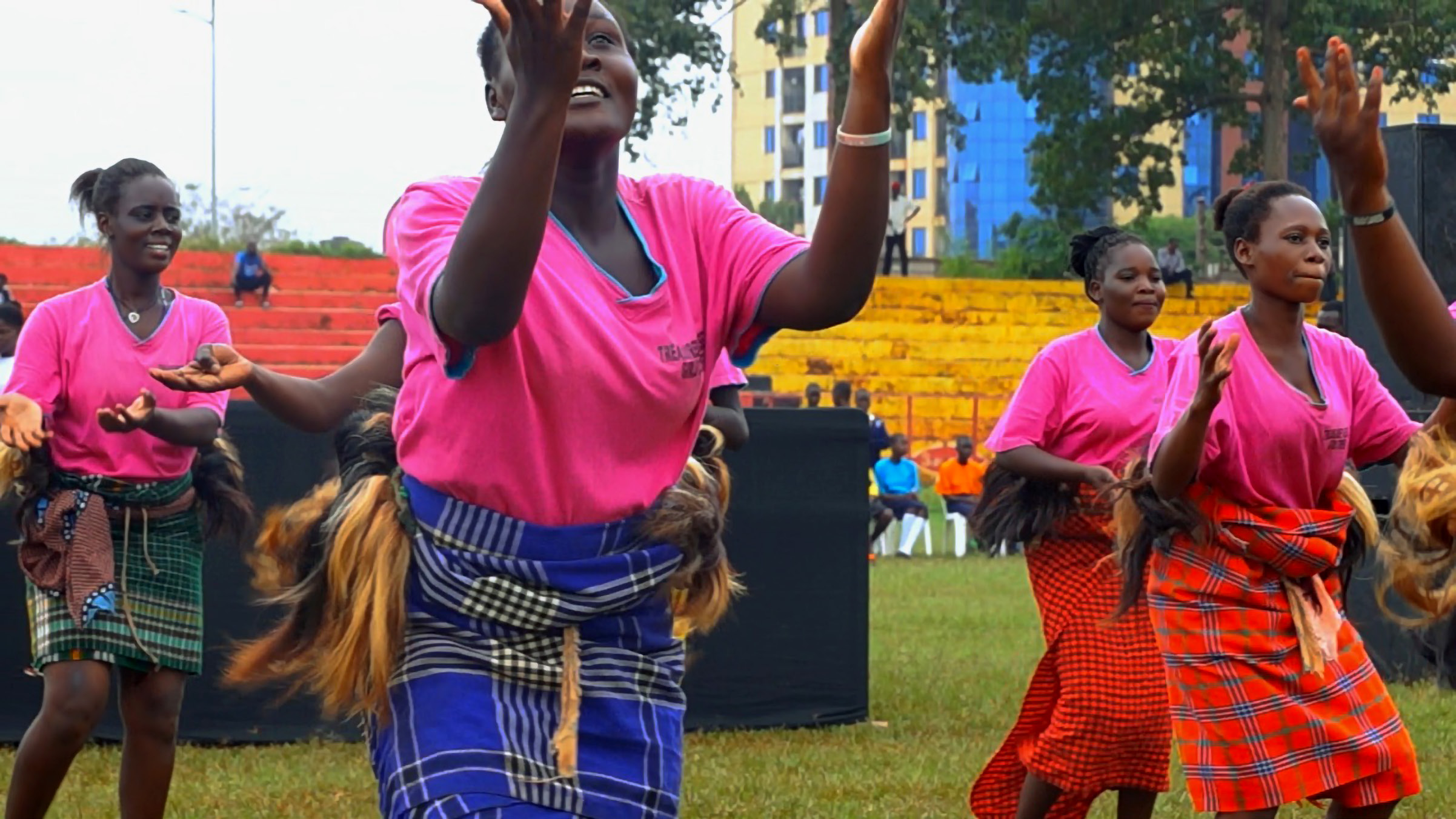
There is a particular moment that happens often in our work, and it never loses its weight.
A girl arrives at the centre convinced that she is the problem. Not that she has a problem, but that she is one. She has absorbed a message, from somewhere or someone, that what has happened to her has reduced her worth. That she is now less than she was.
Almost everything we do exists to answer that idea.
Our name is not decoration. It is our argument, and it comes from a line in Scripture that has shaped how we see every girl and woman who walks through our door.
"But we have this treasure in earthen vessels, that the excellence of the power may be of God and not of us." 2 Corinthians 4:7 (NKJV)
An earthen vessel is ordinary. It is clay. It can be chipped, cracked, or set aside as worthless. And yet the passage insists that what such a vessel carries is treasure, and that the treasure was never dependent on the container looking impressive.
That is the whole idea. A girl's value is not created by her circumstances, and it cannot be destroyed by them. It was there before the crisis and it remains after.
This article explains who we are, why we exist, how our work is structured, what we can honestly do today, what we are still building, and how you can be part of it. It is deliberately detailed. If you are considering trusting us with a referral, a donation or a partnership, you deserve more than a slogan.
Why this centre exists
Treasured Vessels Girls' Centre was founded in 2018 in Jinja District, Uganda, by Racheal Muggaga Achen.
It did not begin with a strategy document. It began with a pattern that became impossible to ignore.
In the community around Masese-Walukuba, Racheal kept encountering girls and women who had fallen through every available gap. Children who had lost parents to HIV/AIDS and were now being raised by relatives with no capacity to support them. Women navigating remarriage, divorce or widowhood with no legal or financial protection. Families in dispute, where a child had become collateral. Girls at risk of trafficking and sexual exploitation. Girls whose schooling had stopped and never restarted.
These are not separate problems. They arrive together, and they compound.
A girl whose father dies is more likely to leave school. A girl out of school is more exposed to early marriage and early pregnancy. A girl who becomes pregnant is more likely to be removed from her home. A girl removed from her home is more vulnerable to exploitation. Each step makes the next one more likely.
What was missing was not sympathy. It was somewhere for her to go, and someone who would still be there in six months.
That is what the centre was built to be.
The wider picture
We are not the whole answer to a national challenge, and we do not claim to be. But it is worth understanding the environment we work in.
Uganda's Ministry of Health recorded a teenage pregnancy rate of around 24% nationally in its Annual Health Sector Performance Report for 2023/24: 21% in urban areas and 25% in rural areas. UNFPA describes the position plainly: roughly one in four Ugandan girls aged 15 to 19 has had a child or is pregnant.
The consequences are not only personal. UNFPA has estimated that Uganda loses in the region of 24% of its potential each year as a result of adolescent childbearing, in a country where, according to the 2024 National Population and Housing Census, around 73% of the population is under 30.
Education outcomes reflect the same pressure. World Bank and UNESCO Institute for Statistics data indicate that only about 25% of Ugandan girls completed lower secondary education in 2017, with roughly 4% enrolling in tertiary education in 2016.
Behind each of those percentages is a girl who had plans.
Why Jinja, and why Busoga
National averages are useful, and they also conceal a great deal.
Jinja sits within the Busoga sub-region of eastern Uganda. It is a city with real economic activity in industry, trade and tourism along the Nile, and that activity sits alongside communities where household income is precarious and services are stretched.
Busoga has been identified in Uganda's own national planning as a region reporting high numbers of teenage pregnancies, particularly during the disruption of the pandemic period. We would caution against reading that as a statement about every family or community here; it is not, and treating a whole region as a problem is both inaccurate and insulting to the many households doing an excellent job in difficult conditions.
What it does mean is that the pressures we described above tend to arrive together in particular neighbourhoods, and that early, local intervention has more effect here than it might elsewhere.
The area we work in, Masese-Walukuba, is a densely populated part of Jinja where many households depend on informal, day-to-day earnings. When income is unpredictable, school fees are the first thing to go, and girls' fees go before boys'. That is not a claim about parental affection. It is arithmetic under pressure, and it is exactly the kind of decision that a modest, well-timed intervention can change.
A community-based organisation has one significant advantage over a larger, more distant one: we notice earlier. We hear that a girl has stopped attending before it becomes a statistic. We know which families are under strain. Proximity is not a substitute for expertise, but it is very difficult to replicate from a capital city.
Why we do not lead with sad stories
You may have noticed that this article contains no photograph of a distressed child, and no detailed account of an individual girl's suffering.
That is deliberate, and it is worth explaining, because it affects how we will communicate with you from here on.
There is a well-established way of raising money for work like ours. You find the most heartbreaking story you have, you photograph the girl at her lowest, and you put both in front of donors. It works. It reliably raises more in the short term than anything else.
We are not willing to do it, for three reasons.
It costs the girl something. A story published today does not expire. It follows her to school, to a job interview, into her marriage, into her children's lives. She may consent at seventeen, when she is grateful and vulnerable and being asked by people who helped her, to something she would never consent to at thirty. We do not think that consent is reliable enough to justify the trade.
It is often inaccurate. The story of a girl at her lowest point is a story about one week of her life, presented as though it were her identity. It leaves out that she is funny, or stubborn, or better at mathematics than her teacher expects. Reducing a person to their worst experience is not honesty. It is editing.
It shapes how you see her. A donor who has only ever seen Ugandan girls depicted as helpless will believe they are helpless. That belief affects how people give, what they expect, and whether they treat these young women as partners or as recipients. The imagery does not just reflect a view. It manufactures one.
So we will show you hands at work, classrooms, training rooms, equipment, staff and the centre itself. Where we tell a personal story, it will be with genuine, informed permission, told with the young woman's agency intact, and focused on where she is going rather than only where she has been.
This will probably cost us some donations. We have decided that is an acceptable price.
How we protect the girls we work with
Safeguarding is not a policy document that sits in a drawer. For an organisation working with vulnerable young people, it is the daily practice that makes everything else possible.
Our commitments are straightforward.
Confidentiality by default. We do not publish names, photographs, schools, home locations or identifying details of the girls we support. When we describe our work publicly, we do so in a way that cannot be traced back to an individual.
Consent that can be refused. A girl's access to our support never depends on her agreeing to be photographed, interviewed or featured. Saying no changes nothing about what she receives. If that were not true, consent would be meaningless.
Careful referral. If someone contacts us about a girl at risk, we do not discuss her situation publicly or confirm her involvement to third parties. We assess, we act, and we keep it private.
Working within the system, not around it. Where a situation requires statutory child protection, police involvement or legal action, we engage the appropriate authorities rather than attempting to handle it informally.
We are still strengthening this. As with our measurement systems, we would rather tell you that our safeguarding practice is under active review and improvement than imply it is beyond challenge. We welcome partners with safeguarding expertise who are willing to examine what we do and tell us where it falls short.
If you are a school, church or organisation considering working with us, we expect you to ask about this. Please do.
A note from our founder, Racheal Muggaga Achen
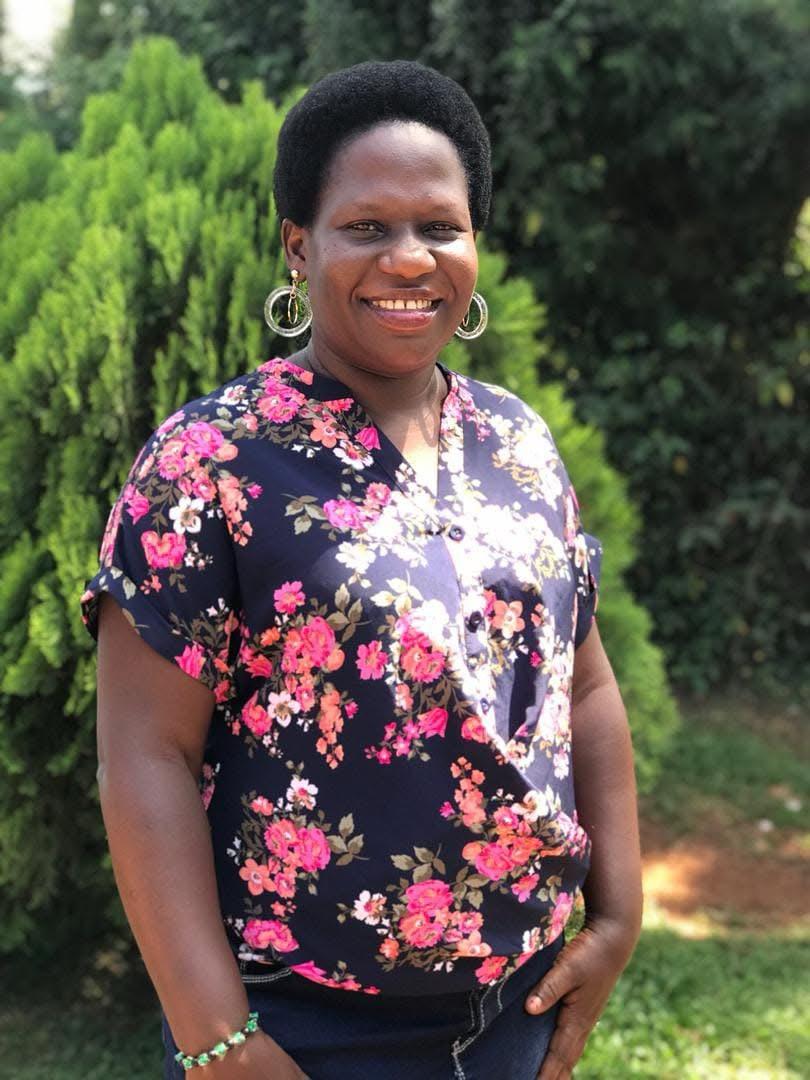
When I began this journey in 2018, I did not set out to start an organisation. I simply saw girls in my community who were vulnerable, struggling and too often being left without the support they needed. I knew I could not solve every problem, but I could help one girl. Then another. And that is where Treasured Vessels began.
I want people to understand that the girls we serve should never be defined by what has happened to them. They are intelligent, capable, creative and full of potential. What many have lacked is not ability or determination, but opportunity, a safe place to belong, and people who will continue to stand beside them.
My hope for the years ahead is that Treasured Vessels can reach more girls, strengthen the support we provide, and create lasting pathways through education, skills and opportunity. I want every girl who comes through our doors to know that her past does not determine her future: that she is valued, she has purpose, and her life can become something beautiful.
Racheal Muggaga Achen Founder, Treasured Vessels Girls' Centre
The five-stage pathway
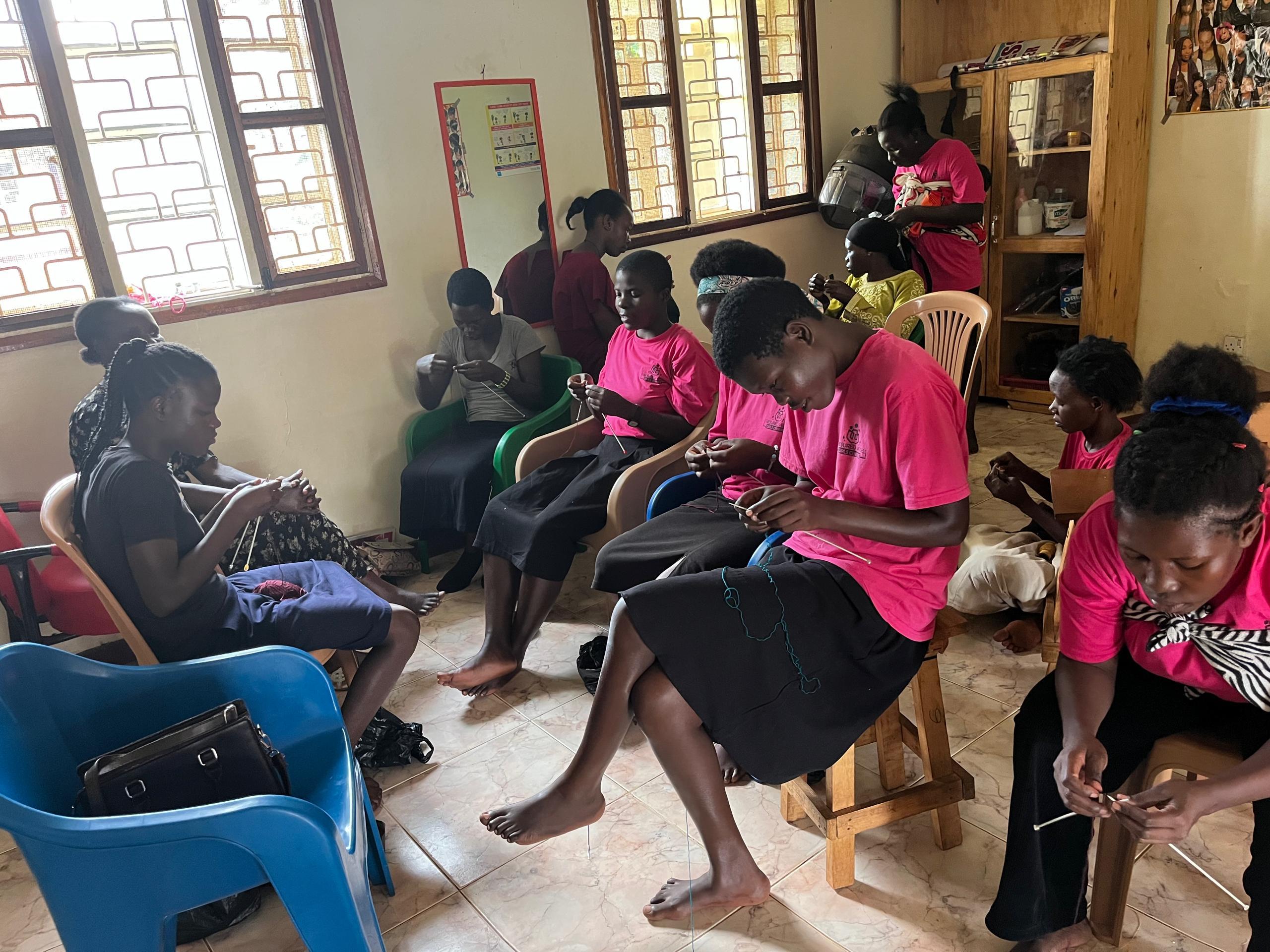
Support that arrives once and then stops rarely changes anything. A girl's situation is not a single event to be solved; it is a sequence, and it needs a sequence in reply.
Our work is organised around five stages. In practice they overlap, and girls do not move through them at the same pace or always in the same order. But the shape holds.
Stage one: Safety
Nothing else can begin while a girl is in danger.
The first question is always immediate: is she safe tonight? That may involve emergency shelter, removing her from a situation of violence or exploitation, or urgent medical attention. It may involve contacting the appropriate authorities.
This stage is not about planning her future. It is about ensuring she has one.
We take this stage seriously in a specific way: safety includes confidentiality. A girl who fears her situation will become public is a girl who will not ask for help. Protecting her privacy is part of protecting her.
Stage two: Recovery
Once a girl is safe, there is a period where very little visible progress happens. This stage is easy to underestimate and impossible to skip.
Recovery is counselling. It is rest. It is regular food. It is antenatal care for a girl who is pregnant. It is the slow work of a young person deciding whether she can trust adults again.
It is also where the belief we described at the start gets rebuilt, not through a speech, but through being treated consistently as someone who matters.
Girls often arrive expecting to be lectured. Being listened to instead is, for many, the unfamiliar part.
Stage three: Education
Education is the stage most likely to change a girl's long-term trajectory, and the one most often interrupted.
For some girls this means returning to formal school, which can require negotiating with the school itself, covering fees and materials, and arranging childcare if she is already a mother. For others, formal school is no longer the right route, and accelerated or alternative learning fits better.
We do not treat returning to a classroom as the only legitimate outcome. We treat a girl continuing to learn as the outcome.
Our School Outreach work also sits here, including menstrual health education and reusable sanitary kits, because a girl who cannot manage her period safely will miss school regardless of how well her fees are paid.
Stage four: Economic transition
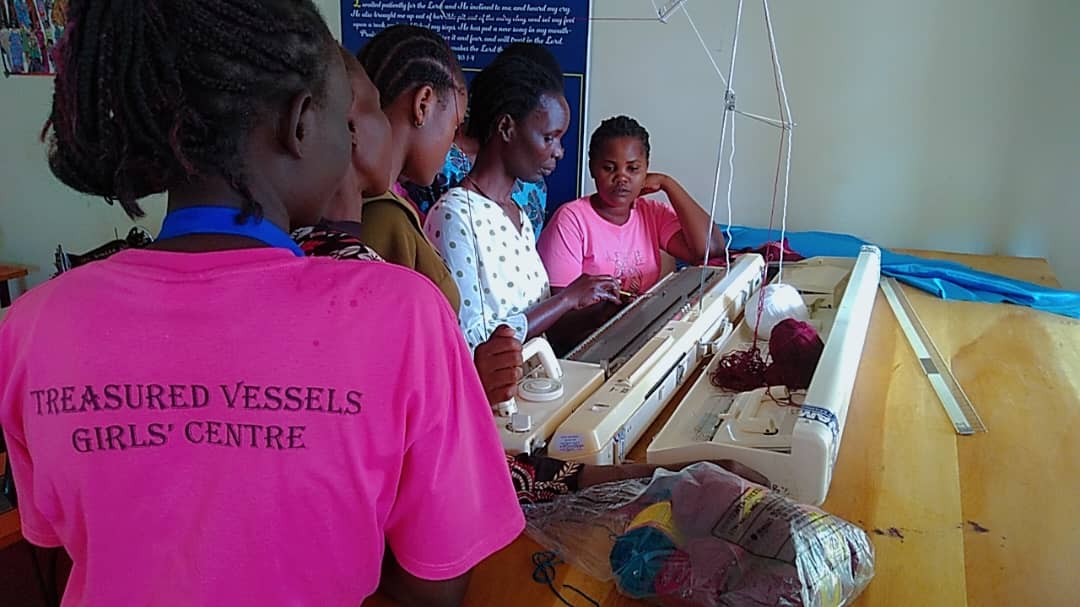
Education without an income route leaves a girl dependent, and dependency is where a great deal of exploitation begins.
This stage is our vocational training: tailoring, hairdressing, baking, soap-making, crafts and shoemaking. It is practical, hands-on, and aimed squarely at work that exists in the local economy.
The goal is not a certificate. The goal is a girl who can earn.
That distinction matters more than it might appear, because a great deal of vocational training worldwide produces qualified graduates who never earn anything. A young woman who has learned to sew still needs three things she usually does not have.
She needs equipment: a machine of her own, or reliable access to one. Skill without a tool is not a livelihood.
She needs customers, which means knowing how to price work, where to find buyers, and how to be found. Many talented graduates fail here rather than at the sewing.
And she needs control of her money: a place to keep it, a basic understanding of saving, and enough standing in her own household that her earnings are not simply absorbed by someone else.
We are candid that we do these three things less completely than we do the training itself. Equipment provision depends on funding. Market access is an area where we actively want partners. This is one of the clearest places where a business, rather than a donor, could change outcomes for our graduates.
Stage five: Voice
The final stage is the one most organisations leave out, and it is the one that determines whether anything lasts.
Voice means a young woman who can advocate for herself, who knows her rights, can speak to a school, a health worker, a landlord or a family member, and expect to be heard.
It also means her participation in the community changes. Girls who have come through our programmes become the people who notice the next girl at risk. Several of our volunteers arrived first as participants.
That is the point at which support stops being something done to a girl and becomes something done with her.
What we currently offer, and what we refer
We think organisations should be precise about the difference between what they deliver and what they connect people to. Blurring the two is how donors end up funding something that does not exist.
What we run directly
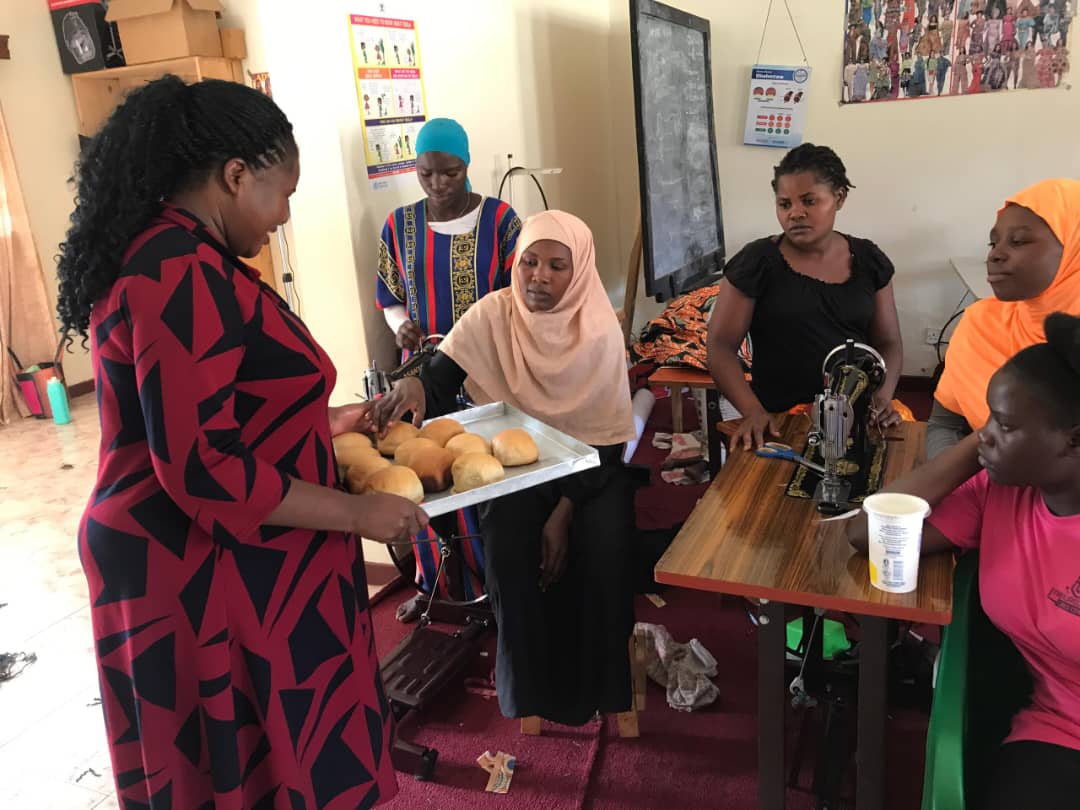
We currently operate six active programmes:
- Girls' education support: tuition assistance, scholastic materials and mentorship
- Vocational skills and economic empowerment: tailoring, hairdressing, baking, soap-making, crafts and shoemaking
- Teenage mother support: parenting guidance, emotional support and routes back into learning or income
- Menstrual health and school outreach: reusable sanitary kits and menstrual health education, delivered to girls and boys
- Protection and rehabilitation: counselling, safe spaces, and advocacy against early marriage and gender-based violence
- Community outreach: engaging local leaders, parents, men and boys to shift the norms that put girls at risk
Alongside these, our documented cause areas include a pregnancy centre offering antenatal support and guidance through delivery, sponsorship of girls and their children's education, women's needs assessments in the community, and support for elderly community members, including flood relief in Mbale.
What we refer
We are a community-based organisation, not a hospital, a law firm or a government agency. There are things we should not attempt to do ourselves, and we would rather say so.
We refer for specialist medical care, formal legal proceedings, statutory child protection intervention, and specialist mental health treatment. Our role in those cases is to identify the need, make the connection, accompany the girl through it where appropriate, and stay involved afterwards.
Being the organisation that knows who to call, and that follows up, is genuinely useful. It is also honest about our limits.
What we are still building
This section is unusual for an organisation's introductory article. We have included it deliberately.
We could describe our impact using large, confident numbers. Many organisations do. We would rather tell you accurately where we are, because we think candour earns more trust than claims we cannot yet evidence, and because anyone considering a serious partnership will find out anyway.
Our measurement systems are improving, and they are not yet where they should be. We can tell you what we do, who we work with, and what we have observed. We are still building the systematic tracking that would let us report longitudinal outcomes with the rigour those claims deserve: how many girls remained in school two years on, how many vocational graduates were still earning after twelve months.
We are working on it. We are not going to pretend it is finished.
Our digital systems are being rebuilt. This website is part of that work. So is the way we record intake, consent, referrals and follow-up.
We are a small organisation. As of 2026, our own records show 13 successful donation efforts, around 30 regular volunteers, six active programmes, and eight years of continuous operation. Those are modest figures and we are not embarrassed by them. They are real.
What we offer is not scale. It is proximity. We live in this community. We know these families. We are still here after the visiting team has gone home, and we will be here next year.
For some funders that will not be enough, and we understand that. For others, particularly those who want to see exactly where money goes and speak to the people spending it, it is precisely the point.
Who we are, verifiably
If you are assessing us, here is what you need.
| Organisation | Treasured Vessels Girls' Centre |
| Type | Registered women-led community-based organisation (CBO) |
| Founded | 2018 |
| Founder | Racheal Muggaga Achen |
| Location | Walukuba-Masese Road, Jinja District, Uganda |
| treasuredvesselsug@gmail.com | |
| Telephone | +256 756 233 041 / +256 774 427 101 |
| Active programmes | Six (listed above) |
| Regular volunteers | Approximately 30 |
We welcome scrutiny from NGOs, government agencies, community groups and donors. Accountability is one of our stated values, and a value that cannot be tested is not worth much. If you want to ask harder questions than this article answers, please do.
What being a Christian organisation means in practice
We are a Christian ministry, and we would rather be clear about what that does and does not mean, partly because it matters to the churches who support us, and partly because it matters to families deciding whether to send us their daughters.
It shapes why we do this. The conviction at the centre of our work is the one we began with: that a person's worth is given rather than earned, and that hardship does not diminish it. That belief is not a nice sentiment we attach to the work afterwards. It is the reason a girl who arrives convinced she is worthless is treated, from the first hour, as though she is not.
It shapes how we treat people. Grace, in practice, means we do not require a girl to explain or justify how she ended up needing help before we help her. There is no moral assessment at the door. Whatever brought her to us, she is received.
It does not make our support conditional. We serve girls and women on the basis of need, not belief. Nobody is required to attend anything, profess anything, or belong to any church in order to receive education support, vocational training, counselling or a sanitary kit. A young Muslim woman in our tailoring programme receives exactly what her Christian classmate receives.
It does not replace professional practice. Faith is not a substitute for proper safeguarding, qualified counselling, medical referral or honest accounting. We hold both: we are a ministry, and we intend to be a competently run organisation. Where those ever appear to conflict, the girl's safety and wellbeing decide it.
Discipleship is available to those who want it. It is offered, never imposed, and never used as leverage.
Three ways to stand with girls in Jinja
If this article has persuaded you of anything, we would rather it be one concrete action than a general good feeling.
1. Refer a girl safely
If you know a girl or young woman in the Jinja area who needs support, you can contact us directly.
Please do so carefully. Do not name her publicly, on social media or in a comment. Do not share her photograph or her situation in a group. Contact us privately, and if she is old enough to be involved in the decision, involve her.
You can reach us privately on +256 756 233 041 or +256 774 427 101, or by email at treasuredvesselsug@gmail.com.
If a girl is in immediate danger, contact the police or local child protection services first.
2. Sponsor an education or skills place
Sponsorship funds a specific girl's continued learning or vocational training.
Practical anchors from our current programmes:
- $15 provides a reusable sanitary kit that lasts around a year
- $50 keeps a girl in school for a term
- $150 provides a sewing machine for a vocational graduate starting her own work
Sponsorship with us funds a plan, not a photograph. We will report on how the money was used and what happened, and we will do that without compromising a girl's privacy or presenting her personal history as a fundraising asset.
3. Discuss a formal partnership
We work with NGOs, government agencies, schools, churches, community groups and businesses.
We are particularly interested in partners who can help with the things we have been honest about not yet having: outcome measurement, safeguarding review, vocational equipment, market access for our graduates, and connections into the health and legal services our girls need.
If your organisation is considering working with us, get in touch and ask us difficult questions. We would rather have a partner who tested us properly at the start.
Read our programmes, then choose one practical way to stand with girls in Jinja
You do not need to solve everything described in this article.
Read what we actually do, pick the one thing you are genuinely able to offer, and start there. A single sponsored term, one honest referral, or one conversation about partnership does more than broad sympathy ever will.
Frequently asked questions
What is Treasured Vessels Girls' Centre?
Treasured Vessels Girls' Centre is a registered, women-led Christian community-based organisation founded in 2018 in Jinja District, Uganda. We support vulnerable girls, teenage mothers and women through education, vocational training, menstrual health outreach, protection and community work.
Where are you based?
We are on Walukuba-Masese Road in Jinja District, Uganda. You can reach us on +256 756 233 041 or at treasuredvesselsug@gmail.com.
What does the name "Treasured Vessels" mean?
It comes from 2 Corinthians 4:7: "we have this treasure in earthen vessels." The idea is that a person's value is inherent rather than earned, and that it is not destroyed by hardship. It reflects how we see every girl who comes to us.
Do you only help Christians?
No. We are a Christian organisation, and our faith shapes why we do this work and how we treat people. Support is offered on the basis of need, not belief.
How do I refer a girl who needs help?
Contact us privately using the details above. Please do not identify her publicly or share her details on social media. If she is in immediate danger, contact the police or local child protection services first.
Can I choose which girl my sponsorship supports?
We match sponsorship to assessed need, and we report on how funds are used and what changed. We do not offer photographs of, or direct access to, individual children as a benefit of donating. Protecting a child's privacy is not something a donation can purchase.
How big is the organisation?
We are small and local. As of 2026 we run six active programmes with around 30 regular volunteers, and we have been operating continuously since 2018. We are honest about our scale and about the measurement systems we are still developing.
How can my organisation partner with you?
Get in touch through our contact page. We work with NGOs, government agencies, schools, churches, community groups and businesses, and we are especially interested in support with outcome measurement, safeguarding, vocational equipment and market access for our graduates.