
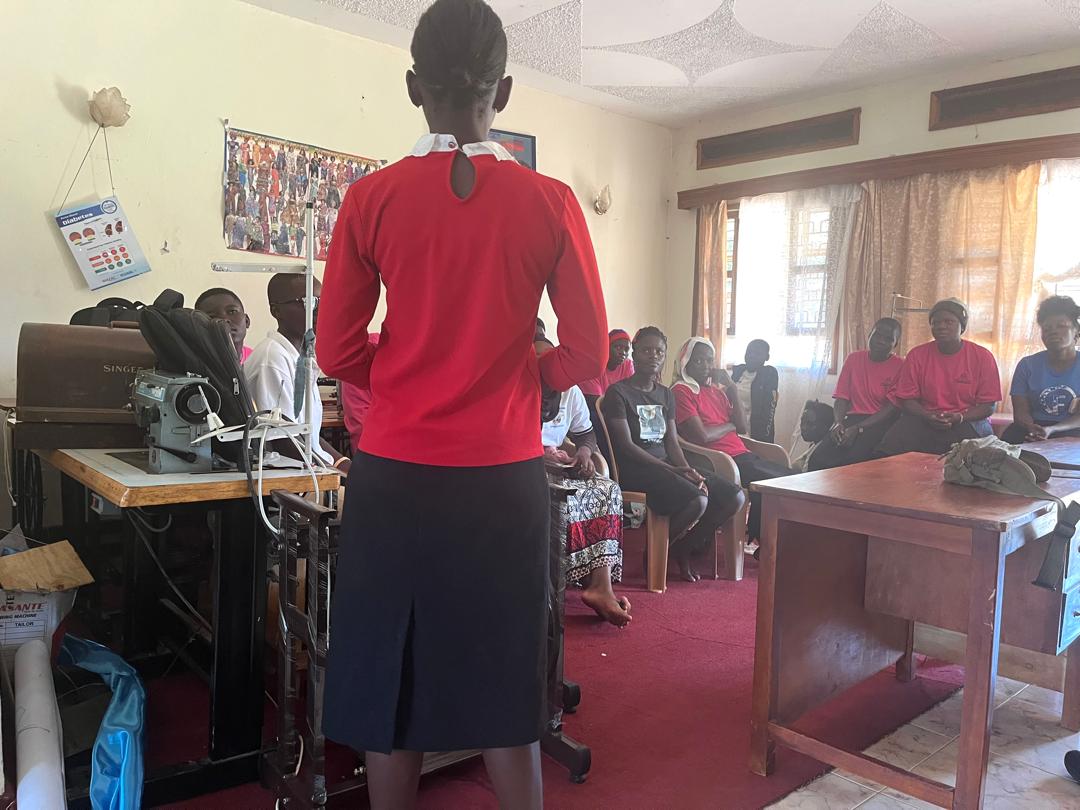
"Sponsor a girl for $30 a month."
You have seen the appeal. Perhaps you have responded to one. It is a good instinct, and the money often does real good.
But the offer is usually vague about the thing a serious donor most wants to know: what exactly does the money buy, who decides, and how will you know whether it worked?
This article sets out what we think responsible sponsorship should look like: a service model with defined components, obligations and reporting, rather than a monthly figure attached to a photograph. It is deliberately specific, so you can hold us to it.
It starts with an assessment, not a package
Most sponsorship programmes begin with a price. We think they should begin with a question: what is actually stopping this girl from learning?
The answer differs every time. One girl is out of school because the fees are unpaid. Another has her fees covered by a relative but no uniform, and is sent home. A third attends reliably except for the week each month when she has nothing to manage her period with. A fourth is a young mother with no one to mind her baby between eight and four.
Send all four the same package and you will solve one problem four times and three problems never.
So every plan we build starts with a documented assessment: her circumstances, her household, what she says she needs, and what is genuinely within our power to provide. That document is what the sponsorship funds, not a generic package and not an assumption.
In practice the assessment works through a short list of questions:
- What is her current status: enrolled, irregularly attending, or fully out of school?
- What specifically interrupted her learning, and when?
- Who is responsible for her, and what can that household realistically contribute?
- Which costs are already covered by someone else, so support does not duplicate them?
- Are there safety concerns that need addressing before education is even the right conversation?
- What does she want? A girl of fifteen usually has a clear view, and it is frequently different from what an adult assumes.
That last question is not a courtesy. A plan a girl has not agreed to is one she has little reason to sustain.
The education cost basket
Fees get the attention. They are rarely the whole cost, and often not the decisive one.
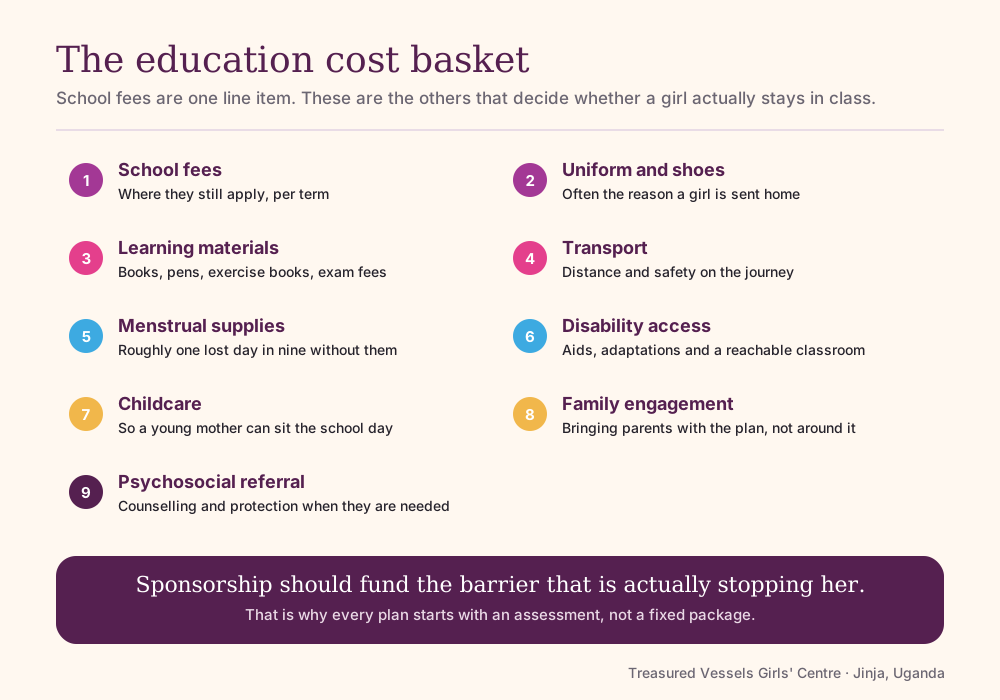
Responsible sponsorship should be prepared to cover any of these, depending on what the assessment finds:
- School fees, where they still apply
- Uniform and shoes: frequently the reason a girl is turned away at the gate
- Learning materials: exercise books, pens, textbooks, examination fees
- Transport, where distance or safety on the journey is the barrier
- Menstrual supplies: without them, roughly one school day in nine is lost
- Disability access: aids, adaptations, and a classroom she can actually reach
- Childcare, so a young mother can sit the school day
- Family engagement: bringing parents into the plan rather than working around them
- Psychosocial referral: counselling and protection where they are needed
A sponsor does not have to fund all nine. But a programme that can only ever fund the first one will keep losing girls to the other eight.
How the money should be handled
Three commitments, and they are separable from one another.
Restricted. A gift given for a girl's education is spent on that plan. Not absorbed into general running costs, not quietly redirected.
Receipted. You get confirmation of what was received and when.
Reported. You are told what the money did: which components were funded, what changed, and what did not.
Notice that none of those three requires knowing who she is.
That distinction is the heart of this article, so let us be direct about it.
Photographs are not something a donation buys
Many sponsorship programmes offer a photograph of the child, letters from her, sometimes her address. It is presented as a benefit, proof that your money reached a real person.
We do not offer this, and we want to explain why rather than simply decline.
UNICEF's guidance on reporting about children is clear that a child's best interests come before every other consideration, including advocacy for children's issues and the promotion of child rights. If protecting a child conflicts with telling a compelling story about her, the child wins. That principle does not stop applying because the audience is a donor rather than a newspaper.
There are three practical problems with sponsor-child access.
Consent obtained under obligation is not reliable consent. A seventeen-year-old being helped by the people asking her permission is not in a strong position to say no. She may agree to something at seventeen that she would refuse at thirty, and the photograph does not expire when her feelings change.
Identifying details travel. A name, a school and a face are enough to locate a girl. For a young woman who has left a violent home or an early marriage, that is not a theoretical risk.
It reframes the relationship. Once a photograph is a benefit of donating, the girl becomes something the donor has bought access to. That is precisely the dynamic our work exists to reverse.
So we hold the two things apart deliberately: complete accountability for the money, complete privacy for the girl. You can verify everything about the first without being given anything from the second.
Why sponsors do not choose the child
A related question we get asked: why can't a sponsor pick who they support?
It sounds harmless, and the instinct behind it is warm. But selection introduces a bias that is well documented across the sector, and it is not a flattering one. When donors choose, the children who photograph well, smile readily, or have the most affecting story get funded first. The withdrawn girl, the one who has stopped trusting adults, the one whose situation is complicated rather than moving. She waits.
Those are frequently the girls in the greatest difficulty.
So the matching decision sits with the people who have done the assessment and know the circumstances. It is less satisfying for the sponsor. It puts the money where it does the most good, which we think is the better trade.
For churches, groups and diaspora supporters
A good deal of our support comes from churches, small groups and Ugandans living abroad, and group giving has a particular strength worth using deliberately.
An individual sponsor typically funds one component for one girl. A group can fund a whole plan, or several, and can sustain it across a full academic year rather than a term. That continuity matters enormously: the most common way sponsorship fails is not fraud, it is a well-meant gift that stops after two terms and leaves a girl mid-year with no route forward.
If your church or group is considering this, the most useful thing you can offer is a commitment you can actually keep for twelve months, even a modest one. We would rather plan honestly around a smaller sustained gift than build around a larger one that may not recur.
We are also glad to report to a group as a group, with the same termly indicators and the same privacy protections.
What we report each term
Accountability without identification is not a fudge. It is perfectly achievable. Here is what a termly report contains.
| Indicator | What it tells you |
|---|---|
| Enrolment confirmed | She is registered and the school has her |
| Attendance | Whether she is actually turning up, not just enrolled |
| Progression | Whether she is moving through the year as expected |
| Major barriers | What got in the way this term, and what we did |
| Safeguarding concerns | Whether any arose, and that they were handled properly |
| Her own assessment | What she says about the support, in her words |
That last line matters more than the rest. A programme that never asks the girl whether it is helping is measuring its own activity, not her outcome.
A report might read: "Learner 04, enrolment confirmed for Term 2. Attendance 91%, two absences due to illness. Progressing normally. Barrier: uniform outgrown, replaced in week 3. No safeguarding concerns raised. Learner reports the reusable kit has removed the absences she previously had each month."
You know exactly what your money did. You do not know who she is. Both of those are deliberate.
What depends on the school, not on us
We should be equally clear about the limits, because a sponsor deserves to know which parts of a plan we can guarantee and which we can only advocate for.
We can commit to: conducting the assessment, funding the agreed components, liaising with the school, following up over at least two terms, and reporting honestly on all of it.
We cannot unilaterally deliver: a school place, teaching quality, whether a school honours re-entry guidance for a young mother, how a girl is treated by staff and classmates, or the condition of the school's water and toilets.
Those depend on the school and on public services. Where they fail, our role is to advocate, escalate, and if necessary help a girl move, but it would be dishonest to sell them as things a sponsorship purchases.
A simple agreement with schools
The gap above is exactly why we would like a written understanding with the schools we work with. Nothing elaborate, just four commitments:
- Attendance reporting: tell us when a sponsored learner stops attending, promptly, so we can act while it is still reversible.
- Non-discrimination: a sponsored girl is not treated differently, publicly identified as sponsored, or singled out in front of classmates.
- Pregnancy re-entry: the school states its position on readmitting a girl after childbirth, in line with national guidance, so we can advise her accurately rather than hopefully.
- A confidential safeguarding contact: one named person we can raise a concern with, discreetly.
If you are a head teacher in Jinja or the wider Busoga sub-region and would sign something along those lines, we would like to hear from you. Getting this right locally is worth more than any amount of policy written elsewhere.
Sponsor an education plan, not a photograph
If you are considering supporting a girl's education, with us or with anyone, these are the questions worth asking:
- Does support begin with an assessment, or a fixed package?
- Which of the nine cost components can actually be funded?
- Is the gift restricted, receipted and reported?
- Is the child's privacy protected, or traded as a donor benefit?
- Does the reporting include what the girl herself says?
- Is the organisation honest about what depends on the school?
Ask us those questions. Ask other organisations too. Any programme worth your money should welcome them.
Our published anchors, so you can see the scale of things: $15 provides a reusable sanitary kit lasting about a year, $50 covers a term, and $150 provides a sewing machine for a young woman for whom a trade is the better route. Which of those is right depends entirely on what the assessment finds.
Frequently asked questions
Can I choose which girl I sponsor?
We match support to assessed need rather than letting sponsors select a child. This keeps the decision with the people who know the circumstances, and avoids the more appealing-looking children being funded first.
Will I receive a photograph of the girl I sponsor?
No. Photographs and identifying details are not offered as a benefit of donating. We report fully on what your money funded and what changed, without exposing a girl's identity. Accountability and privacy are separate things, and we protect both.
How do I know my money was actually used properly?
Gifts are restricted to the agreed plan, receipted, and reported each term against enrolment, attendance, progression, barriers encountered, safeguarding, and the learner's own view of the support.
What does sponsorship actually cover?
Whatever the assessment identifies from the cost basket: fees, uniform, learning materials, transport, menstrual supplies, disability access, childcare, family engagement or psychosocial referral. It is not a fixed bundle.
What if the girl leaves school anyway?
Sometimes that happens, and we will tell you. Where a girl cannot continue in formal school, we look at accelerated learning or vocational training instead, and the choice is hers. We would rather report an honest change of route than quietly close a file.
Can my school partner with Treasured Vessels?
Yes. We are looking for schools willing to commit to prompt attendance reporting, non-discrimination, a clear position on pregnancy re-entry, and a confidential safeguarding contact. Please get in touch.
Is my donation tax deductible?
Treasured Vessels Girls' Centre is a registered community-based organisation in Uganda. Deductibility depends on your own country's rules, so please check locally. We would rather you verify that than take our word for it.