
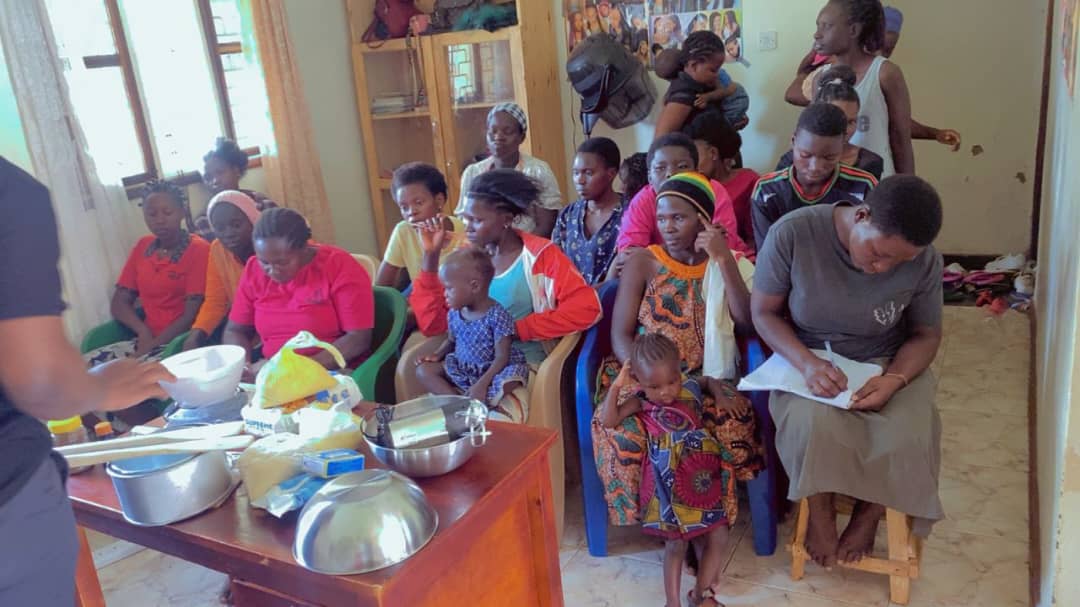
Ask someone in Kampala about teenage pregnancy in Uganda and they will usually quote you a national figure. Around one in four girls aged 15 to 19 has had a child or is pregnant. It is a serious number, and it is accurate.
It is also, on its own, almost useless for planning anything.
National averages describe a whole country at once. They cannot tell a head teacher in Walukuba which girls in her class are at risk, or tell a health worker in Masese where the gaps in her referral chain are. For that you need to look much closer: at the sub-region, the district, and eventually the parish.
When you do that in Busoga, the picture changes considerably.
Where Jinja sits, and why it matters
Jinja lies at the source of the Nile in eastern Uganda, within the Busoga sub-region. Busoga covers roughly a dozen districts, including Jinja, Kamuli, Iganga, Mayuge, Luuka, Bugiri, Namayingo and others.
Jinja itself is not a typical rural district. It has a city, an industrial history, a busy trading economy and a tourism sector along the river. It has a regional referral hospital. It has secondary schools, vocational institutions, a district local government and a substantial NGO presence.
That combination matters, because it means Jinja contains two quite different realities within a short drive of each other. There are households with formal employment and reliable income. There are also densely populated areas, Masese-Walukuba among them, where most families depend on informal, day-to-day earnings that can disappear without warning.
A girl's risk is shaped far more by which of those households she was born into than by which district appears on her address.
What the regional numbers actually show
Busoga has carried a disproportionate share of Uganda's teenage pregnancy burden for years, and the data is consistent enough that local leaders no longer dispute it.
Research covering 2019 to 2020 recorded some 89,347 teenage pregnancies across Busoga, a period that included the prolonged closure of schools during the COVID-19 pandemic, which researchers have repeatedly identified as a major aggravating factor. Reporting from that period describes girls as young as 13 becoming pregnant.
More recent figures from Jinja Regional Referral Hospital put the teenage pregnancy burden across Busoga at around 18.8% in the second quarter of the 2024 financial year.
Uganda's Annual Health Sector Performance Report for 2023/24 states the consequence plainly: teenage pregnancy is the leading killer of girls aged 15 to 19 in Uganda.
But here is the part that gets left out of most summaries.
The district variation is the whole point
Within Busoga, the rate is not uniform. Recent district-level reporting shows Namayingo at around 24.3% and Jinja City at around 11.4%, the lowest in the sub-region. Most districts average somewhere around 21%.
Read that again, because it cuts against the way this region is usually described.
Jinja City has less than half the rate of the worst-affected district in its own sub-region. Kamuli and Luuka have at different points recorded the highest numbers of teenage births in the country. These places are neighbours. They share a language, a culture and a history. They do not share an outcome.
Two things follow from that, and both matter for anyone working here.
First, Busoga is not one problem. Treating the sub-region as uniformly in crisis is inaccurate, and it is unfair to the many families, schools and communities here who are doing an excellent job in genuinely difficult circumstances. Blanket statements about a region tend to insult the people succeeding in it.
Second, a low district average does not mean there is no problem. Jinja City's 11.4% is a district-wide figure. It averages together neighbourhoods with very different levels of pressure. A girl in a household surviving on unpredictable daily earnings does not become safer because the district she lives in performs well overall.
This is precisely why local presence matters more than national data. The variation that shows up between districts also exists between parishes, between villages, and between streets, and no national survey will ever be granular enough to find it.
How the pressures overlap
Where risk does concentrate, it is rarely one cause. It is several arriving together and reinforcing one another.
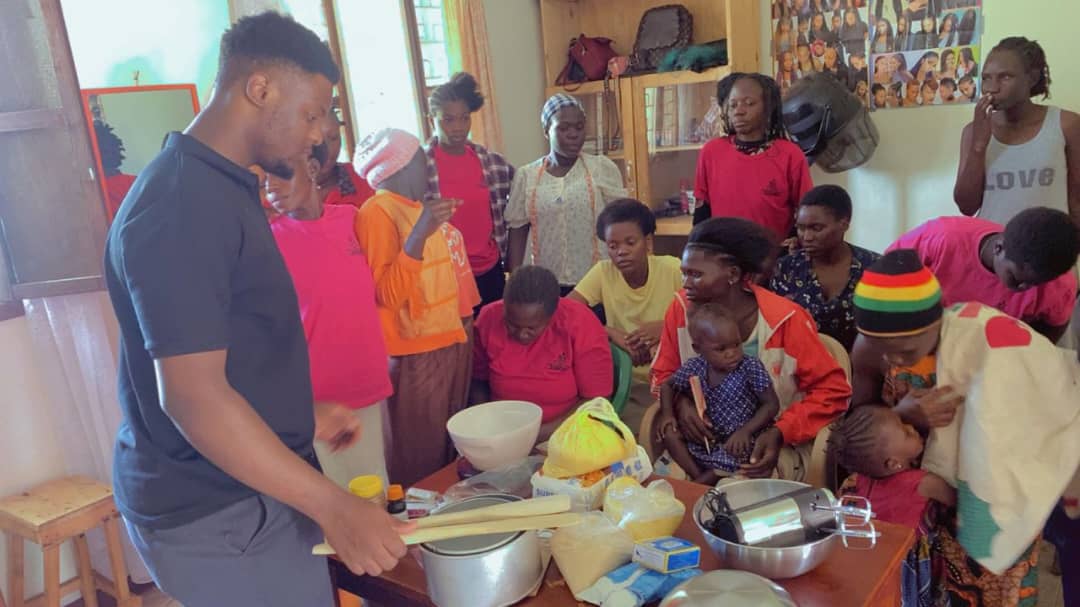
Household economics. When income is informal and unpredictable, school costs are the first expense to be cut, and girls' costs are usually cut before boys'. This is not a statement about how much families love their daughters. It is arithmetic under pressure, and it is exactly the kind of decision that a modest, well-timed intervention can reverse.
Disrupted schooling. A girl who leaves school does not simply stop learning. She loses the single most protective structure in her day: supervision, routine, peers, and a reason to be somewhere specific at a specific time. The pandemic demonstrated this at scale across Busoga.
Violence and safety. Some pregnancies are not the result of a choice at all. Any honest discussion of this issue has to hold that fact steadily, without sensationalising it and without pretending it is rare.
Limited adolescent-friendly services. Health services may exist and still be effectively unavailable to a fifteen-year-old who believes she will be judged, reported to her parents, or turned away. Distance is not the only barrier; anticipated shame is often a bigger one.
Gender expectations. Where a girl's future is assumed to be marriage and childbearing, education becomes negotiable, something to continue only while nothing more important comes along.
None of these operate in isolation. A girl who leaves school for economic reasons becomes more exposed to early marriage. A girl who cannot access confidential health advice is less able to protect herself. A girl who believes her future is fixed has less reason to resist any of it.
What is already being done here
It would be misleading to present Jinja as a place where nothing is happening. Quite a lot is.
Jinja District has passed by-laws aimed directly at child protection and school retention, covering harmful child labour, excessive domestic chores, curfews, and deliberate school dropout, with provision for children who refuse schooling without good cause to be referred to probation officers for counselling rather than simply punished.
The district has also developed a Local Government Action Plan to End Child Marriage and Teenage Pregnancy covering 2024/25 to 2026/27. Other organisations, including Good Neighbours, work across Jinja and the wider sub-region supporting enforcement and community awareness. The district local government maintains a register of NGOs permitted to operate here.
In other words, there is a framework. There is political will. There are laws, plans, health facilities, schools, probation officers and organisations.
So why does a community-based centre still matter?
What a local centre adds that a system cannot
Large systems are good at scale and poor at proximity. That is not a criticism; it is a structural fact.
A district action plan cannot notice that a particular girl has stopped coming to school this month. A health facility cannot know that a family's income collapsed in March. A by-law cannot build enough trust for a frightened fifteen-year-old to tell someone what has happened to her.
Those things require someone who is nearby, known, and still there next year.
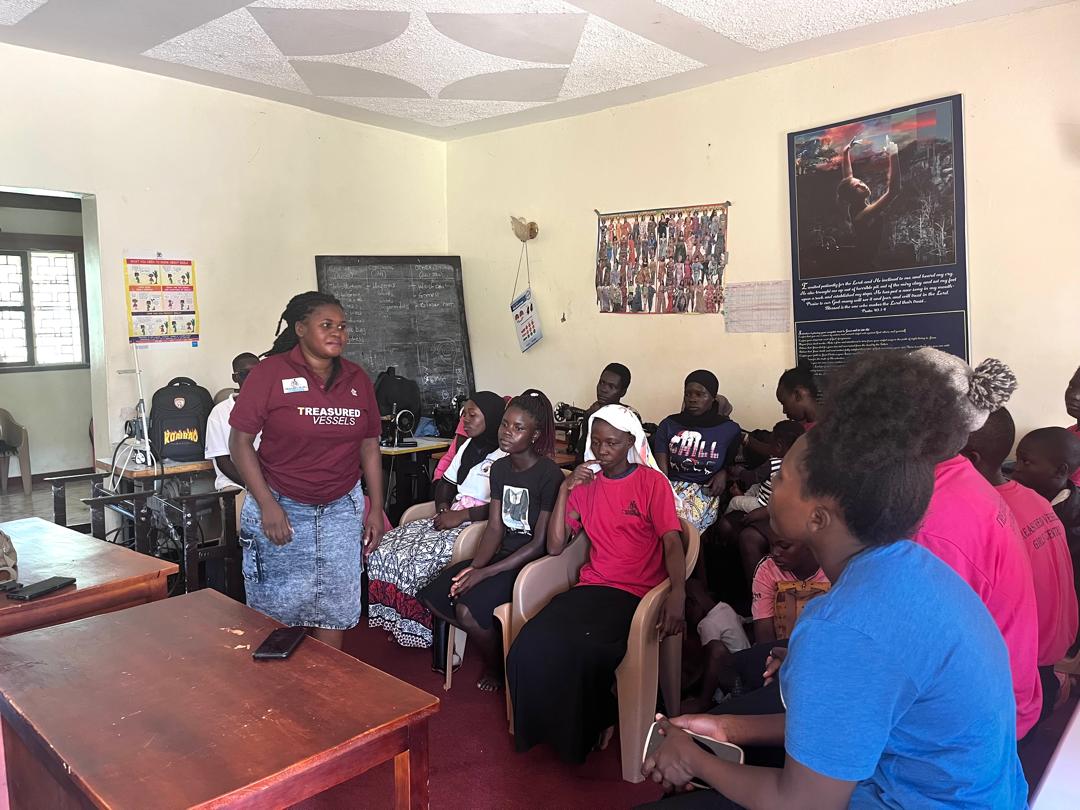
This is the specific contribution a community-based organisation makes, and it comes down to three things.
We notice earlier. Absence from school registers as a pattern long before it registers as a statistic. Living in the same community means seeing it while it is still reversible.
We hold relationships that institutions cannot. Trust is built through repetition and time. A girl who has attended a skills session every week for six months will say things she would never say in a formal interview.
We connect girls to systems that feel distant. Most of what a girl in crisis needs already exists somewhere in Jinja: medical care, legal protection, probation services, formal education. The barrier is rarely that these services are absent. It is that she does not know they exist, cannot reach them, or is too afraid to try alone.
Our role is not to replace any of that. It is to be the connection between a girl and a system that was, in principle, always available to her.
We should be clear about our own limits too. Treasured Vessels is a small, registered community-based organisation running six programmes with around 30 regular volunteers. We are not a hospital, a court, or a statutory child protection agency. Where those are needed, our job is to recognise it quickly and hand over properly, not to attempt it ourselves.
The referral map we want to build
Here is something we do not yet have, and think Jinja needs.
There is no single, current, shared map of where a girl in this district can actually be sent: schools willing to re-enrol a young mother, health facilities offering genuinely adolescent-friendly services, probation and child protection contacts, legal support, and the organisations already working on each of these.
Individual institutions each hold part of this knowledge. Very little of it is written down in one place, and what does exist goes out of date quickly as staff move on.
We would like to help build that map, and we want to be precise about what it would and would not contain.
It would include: schools and their re-entry policies, health facilities and their adolescent services, probation and child protection contacts, legal support, and partner organisations with their areas of work.
It would never include: the homes, precise locations, names or identifying details of the girls and families we serve. A referral map is a directory of services, not a register of vulnerable people. Any version that compromised a girl's privacy would be worse than having none at all.
We cannot build this alone, and we should not. A referral map assembled by one organisation without local verification would be inaccurate within months and potentially harmful, sending a girl to a service that has closed, moved, or never offered what we claimed.
Join the Jinja referral and support network
This is an invitation to the institutions already working here.
If you are a school in Jinja or the wider Busoga sub-region, tell us your re-entry policy for young mothers, so we can advise girls accurately rather than hopefully.
If you are a health worker or facility, tell us what adolescent-friendly services you genuinely offer and on what terms, so we stop sending girls to doors that will not open for them.
If you are a church or community leader, you often hear about a family's difficulty before anyone official does. That early warning is worth more than any survey.
If you are a local business, our vocational graduates need equipment, customers and market access far more than they need sympathy.
If you work in local government or probation, help us make sure what we tell girls about their rights and options matches what the system will actually deliver.
"Therefore, as we have opportunity, let us do good to all." Galatians 6:10 (NKJV)
Every one of these institutions is already doing part of this work. What is largely missing is not effort but connection: a reliable way for each of us to know what the others can actually offer.
Get in touch to join the referral network →
Frequently asked questions
Does Busoga really have Uganda's highest teenage pregnancy rates?
Busoga has consistently carried a disproportionate share of Uganda's teenage pregnancy burden, and research covering 2019 to 2020 recorded around 89,347 teenage pregnancies across the sub-region. However, rates vary considerably between districts, so the sub-region should not be treated as uniform.
Which Busoga districts are most affected?
Recent district-level reporting places Namayingo highest at around 24.3%, with most districts averaging around 21%. Kamuli and Luuka have at different points recorded the country's highest numbers of teenage births.
Is teenage pregnancy a serious problem in Jinja specifically?
Jinja City records the lowest rate in Busoga, at around 11.4%. That is a district-wide average, and it conceals significant variation between neighbourhoods. A comparatively good district figure does not mean individual communities within it are unaffected.
Why did teenage pregnancy rise so sharply during the pandemic?
Researchers have repeatedly linked the increase to prolonged school closures, which removed the routine, supervision and protective structure that school provides, alongside worsening household poverty.
Is the local government doing anything about this?
Yes. Jinja District has passed by-laws addressing child labour, school dropout and child protection, and has a Local Government Action Plan to End Child Marriage and Teenage Pregnancy for 2024/25 to 2026/27. Several organisations also work on this across the sub-region.
How can my school, church or organisation work with Treasured Vessels?
Get in touch through our contact page. We are particularly interested in accurate information about school re-entry policies, adolescent-friendly health services, and referral contacts, so that the guidance we give girls reflects what is genuinely available.