
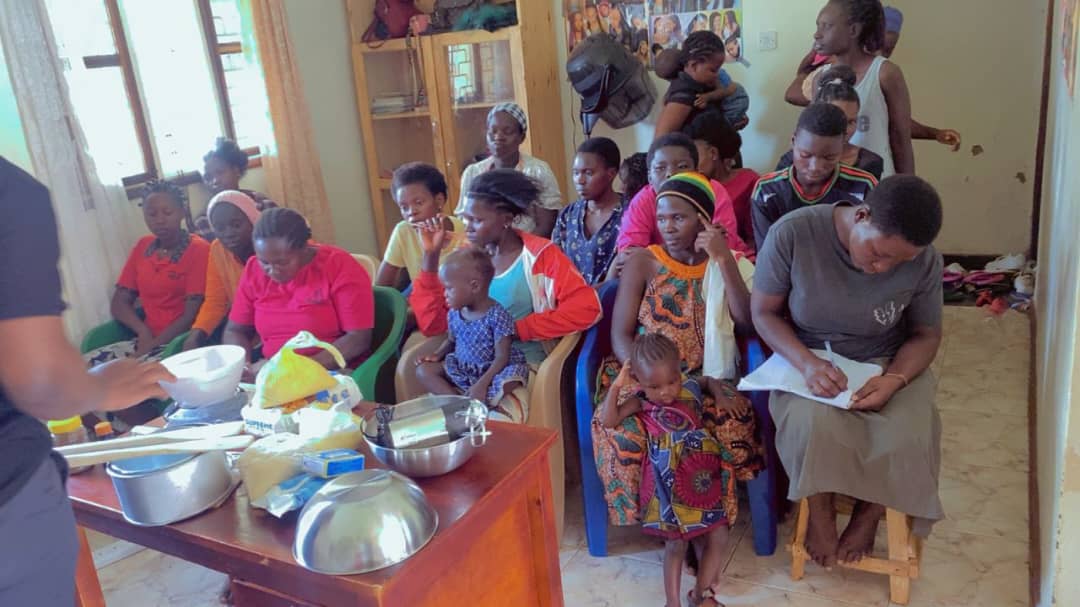
There is a particular kind of event that happens often in this work. Men are invited. Speeches are made. Someone says that girls are the future and that violence against women is wrong. Everybody applauds, photographs are taken, and nothing in any household changes.
We have been to those events. We have probably helped organise one.
The problem is not that the sentiments are wrong. It is that praise is being handed out for holding an opinion, when what a girl actually needs is for somebody's conduct to be different on Tuesday.
So this article is not an appreciation of good men. It is a description of what allyship looks like when it is real, who it is for, and, the part that gets left out, the specific ways that "male involvement" can make a girl's situation worse.
Start with the test
Before any list of roles, one question, which applies to every action described below:
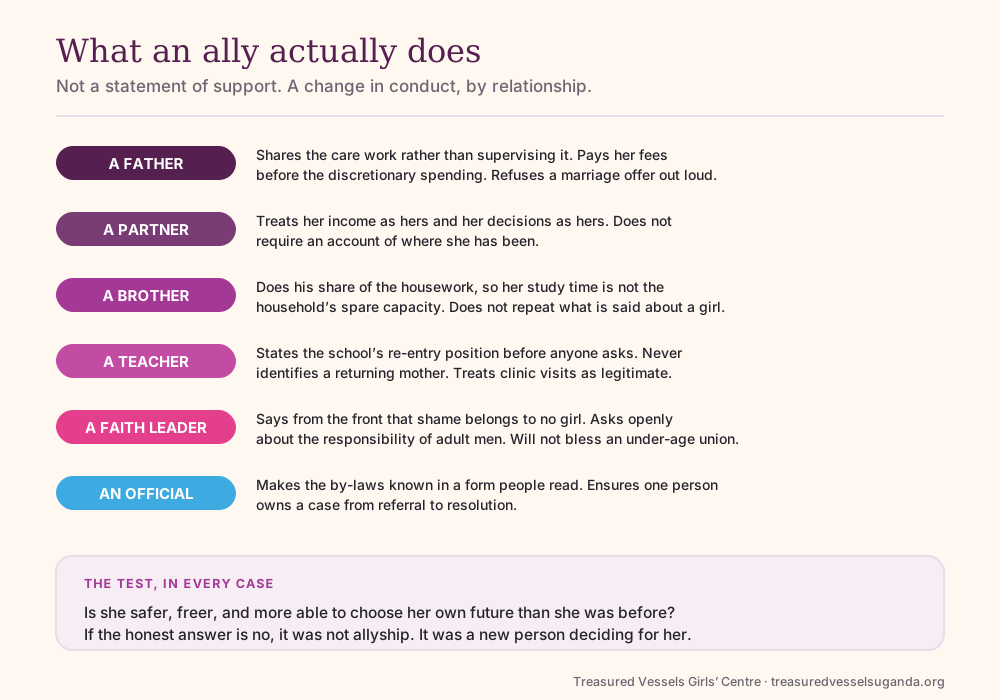
Is she safer, freer, and more able to choose her own future than she was before?
If the honest answer is no, it was not allyship. Whatever else it was, whether well-intentioned, culturally appropriate or publicly admired, it did not help.
That test does real work, because it rules out a great deal of what commonly passes for male involvement. A father who decides his daughter will return to school has not made her freer if she wanted a trade. A pastor who reconciles a woman with a violent husband has not made her safer. A committee of men convened to protect girls, containing no girls, has not made anyone more able to choose.
What an ally actually does
Roles differ by relationship, and vague encouragement helps nobody. Here is the specific version.
If you are a father
Share the care work rather than supervising it. There is a difference between helping and being responsible, and every household knows which one is happening.
Pay the fees before the discretionary spending. This is the single most consequential financial decision most fathers make about a daughter, and it is usually made by default rather than deliberately.
Refuse a marriage offer out loud, in front of people. Declining quietly protects the peace. Declining publicly changes what the next family believes is expected of them.
If you are a partner
Treat her income as hers. A woman who completes vocational training and then hands over her earnings has swapped one dependency for another.
Treat her decisions as hers, including the ones you would have made differently. And do not require an account of where she has been. That is not concern, whatever it is called.
If you are a brother
Do your share of the housework. In a great many homes a girl's study time is whatever is left after the domestic work is done, and the domestic work is not shared. This is not a small point; it is one of the quiet mechanisms by which girls fall behind boys of identical ability.
Do not repeat what is said about a girl at school. Adolescent boys have more influence over whether a pregnant classmate returns to the classroom than almost any adult.
If you are a male teacher
State the school's re-entry position before anyone has to ask. Never identify a returning mother in assembly or to her class. Treat clinic appointments as legitimate absence rather than truancy.
If you are a religious or cultural leader
You are, in practice, the person most likely to be consulted before an early marriage happens, long before any official hears of it.
Say from the front, once, that shame belongs to no girl. Ask openly about the responsibility of adult men, because the silence on that is doing more damage than anything said about the girls. And do not officiate or bless a union involving anyone under eighteen. Beyond the harm to her, it associates you with conduct the Penal Code treats as a felony.
If you are a local official
Make the by-laws and national guidance known in a form people actually read. Ensure that one named person owns a case from referral to resolution, so nobody is lost in the gap between a school and a health centre.
Four ways "male involvement" goes wrong
This is the section that most articles on this subject leave out, and it is the reason we wrote the piece.
1. It transfers the decision instead of removing the obstacle
The most common failure. A programme engages fathers, fathers become enthusiastic, and a set of decisions that were being made by mothers and daughters is now being made by men who have recently attended a workshop.
The girl's circumstances may improve. Her authority over her own life has not. And the arrangement is only as good as the man's continued enthusiasm.
The corrective is uncomfortable and simple: an ally's job is to remove obstacles, not to choose destinations. Pay the fee; do not select the school. Accompany the referral; do not answer the questions.
2. It pushes reconciliation with someone unsafe
Male-led community mediation has a strong tendency to treat the restoration of a household as the objective. Where there is violence, that objective is directly opposed to a woman's safety.
No man should be brokering a reconciliation between a woman and a partner who has harmed her. Not as a pastor, not as an elder, not as a relative, not with the best intentions available. If she wants to return, that is her decision and she does not need help making it. If she does not, pressure dressed as counsel is a further harm.
3. It becomes a performance
Commitment ceremonies, pledges, photographs, matching shirts. These are not useless, and public commitment does shift norms, but they are extremely easy to substitute for the private, unphotographed work of doing the washing or handing over money.
A useful diagnostic: if a man's involvement is visible to his community but produces no observable change in his own household, it is a performance.
4. It centres men in a story that is not about them
There is a version of this work where men become the heroes of an account about girls, and are thanked at length for meeting a basic standard of decency.
We would rather set the standard at the ordinary level it belongs at. Not marrying off a fourteen-year-old is not an achievement. It is the floor.
Why engage men at all
Given all four of those, a reasonable person might ask why bother.
Because the alternative fails. A prevention strategy aimed only at girls places the entire burden on the people with the least power in the situation. It asks a fifteen-year-old to negotiate her way out of circumstances created by adults, and then treats her failure to do so as a failure of empowerment.
Uganda's National Strategy to End Child Marriage and Teenage Pregnancy (2022/23 to 2026/27) makes community engagement one of its pillars, alongside legal reform, education, health services and economic empowerment. Engaging men and boys sits inside that work, together with positive parenting and stronger community systems.
The practical case is narrower and harder to argue with. In a community where an adult man faces no social consequence for a relationship with a schoolgirl, no amount of girls' empowerment closes that gap. The consequence has to come from other men.
A men-and-boys accountability session
Here is what we would propose running with a church, a mosque, a school or a village committee. It is a session, not a campaign, and it runs about two hours.
Facilitated discussion, not a lecture. Men do not change their conduct because they were told to at the front of a room. The useful part is the conversation between them, particularly the disagreements. Our role is to keep it honest and on time.
Plain legal information. What the Constitution says about the minimum age. What section 129 of the Penal Code makes an offence. What the Children (Amendment) Act covers, including informal unions. Most of this is genuinely news to most people, and it changes the conversation from opinion to fact. The plain-language version is in what Ugandan law says about child marriage.
Positive parenting. Practical alternatives for a father under real financial pressure, because "do not marry her off" is not advice unless something replaces it.
Violence prevention, stated concretely. Not a general condemnation, but the specific commitments: what is not acceptable, what to do when another man is doing it, and why "it is a family matter" is the sentence that protects the person causing harm.
Referral information everyone leaves with. The Uganda Child Helpline is 116, free from any network, 24 hours. Our numbers. Who the district probation and social welfare officer is. A session that produces goodwill and no phone numbers has not finished.
The commitment card
At the end, each man completes one of these. It is not collected.
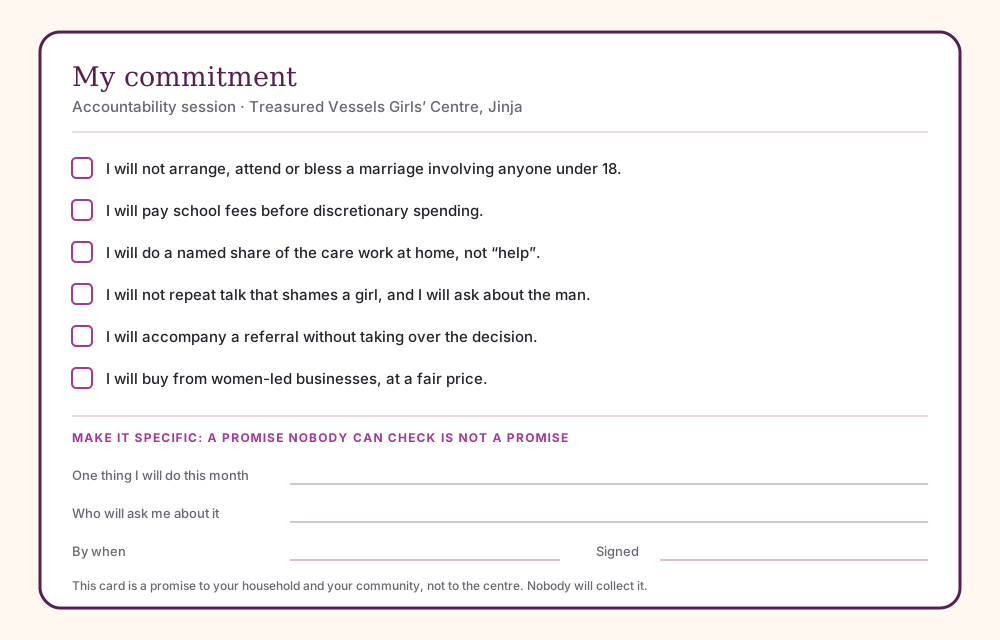
The design is deliberate in two respects. The commitments are specific enough to fail: "I will pay school fees before discretionary spending" can be checked; "I will support girls' education" cannot. And each man names who will ask him about it, because a commitment with no one attached to it is a feeling.
Nobody collects the cards. A promise made to the centre is worth much less than one made to a household.
Download the commitment card as a printable PDF →: two A4 pages. The first holds two identical cards to a sheet, so one photocopy serves two men; the second is a facilitator's sheet with the two-hour run order, the four things to watch for, and the referral numbers. It photocopies in black and white and may be freely copied.
"Learn to do good; seek justice, rebuke the oppressor; defend the fatherless, plead for the widow." Isaiah 1:17, NKJV
The verb in that verse is rebuke, and its object is another person with power. It is not a call to feel sympathetic.
One more thing worth doing
Buy from women-led businesses, and pay the asking price.
Several of the young women who complete our skills training go on to sell tailoring, baking or hairdressing. Men are a large share of the customers and, in many households, control the purchasing decision.
Choosing a woman's business over a competitor, and not negotiating her down because she is young and new, is a transfer of real economic power that requires no meeting, no pledge and no photograph.
Host a session with us
If you lead a congregation, a school, a workplace or a village committee in the Jinja area, we will come and run this with you. There is no charge, and we will work around your timetable rather than ours.
We ask two things: that the men who most need to be in the room are actually invited, and that you are willing for the session to be uncomfortable in places. A session where everyone agrees with everything has not touched anything.
Arrange a men-and-boys accountability session →
Frequently asked questions
Why focus on men when the harm is done to girls?
Because a strategy aimed only at girls asks the people with the least power to solve a problem created by adults. Where adult men face no social consequence for a relationship with a schoolgirl, that consequence has to come from other men.
Does engaging men risk taking decisions away from girls and women?
Yes, and it commonly does. The corrective is that an ally's role is to remove obstacles, not to choose destinations: pay the fee, but do not select the school; accompany a referral, but do not answer for her.
Should men help reconcile a woman with a violent partner?
No. Where there is violence, restoring a household and protecting a woman are different objectives, and mediation by men routinely pursues the first at the expense of the second. If she chooses to return, that is her decision to make without pressure.
What actually happens in an accountability session?
About two hours: facilitated discussion rather than a lecture, plain legal information on the minimum age and defilement, practical parenting alternatives for families under financial pressure, concrete violence-prevention commitments, and referral contacts everyone leaves with.
Do you collect the commitment cards?
No. Each man keeps his own. A promise made to a visiting organisation is worth much less than one made to a household, and naming who will ask you about it matters more than signing anything.
What is the most useful thing a father can do?
Pay school fees before discretionary spending, and refuse a marriage offer out loud rather than quietly. The first keeps her in education; the second changes what the next family believes is expected.
Can our church or school arrange a session?
Yes. Get in touch. There is no charge, and we will fit your timetable, but we ask that the men who most need to be there are genuinely invited.