
A reusable pad is not a product. It is a product plus a set of conditions, and if the conditions are missing you have handed a girl something worse than what she had.
That is an unusual thing for an organisation that makes reusable pads to write. We think it needs saying, because the enthusiasm around washable pads has outrun the practical detail, and the practical detail is where a girl's actual experience is decided.
So this article covers three things: what the evidence genuinely shows about reusable pads, what separates a well-made one from a badly made one, and the six conditions that have to hold before anyone should be given one.
What the evidence actually shows
The research on reusable pads in East Africa is better than most people assume, and more mixed than the fundraising suggests.
They leak less than the alternative most girls are actually using. A Ugandan trial among schoolgirls found leakage reported by 44.4% of reusable pad users against 78% of those using cloths. That comparison matters, because the realistic alternative for many girls is not a shop-bought disposable pad. It is a piece of old cloth.
Girls rate them as more reliable. In a cross-sectional evaluation of 205 menstruating schoolgirls across eight rural Ugandan schools, those using the provided reusable pads gave significantly higher ratings for absorbent reliability across activities, reported fewer difficulties changing, and reported less disgust with cleaning than girls using improvised methods.
Skin irritation went down, not up. In a Ugandan cohort in a refugee setting, self-reported skin irritation was 23.8% after three months of reusable pad use, against 72.8% at baseline when disposables were being used. This is self-reported and from one specific setting, so treat it as encouraging rather than conclusive.
Now the parts that get left out.
Some things did not improve. In the same Ugandan schoolgirl evaluation there were no significant differences in reported soiling of outer garments or in odour during the last period. A reusable pad is better at some things and not magic at all of them.
There is no good objective infection data. Reviews of the African evidence note self-reported outcomes but no objective reporting on infection. Anyone telling you reusable pads are proven safe or proven unsafe on that measure is going beyond the evidence in both directions.
Uptake varies enormously. Across cohort studies, take-up of reusable pads has ranged from 22% to 100%. That spread is the whole story of this article. The product is the same. The circumstances are not.
The reported barriers are always the same four things: not enough pads in the set, and no water, no privacy or no drying space. Which brings us to the conditions.
The six conditions
Before we give anyone a reusable kit, we want these six to hold. Where they do not, disposables and a working latrine will serve her better, and we would rather say so than complete a distribution.
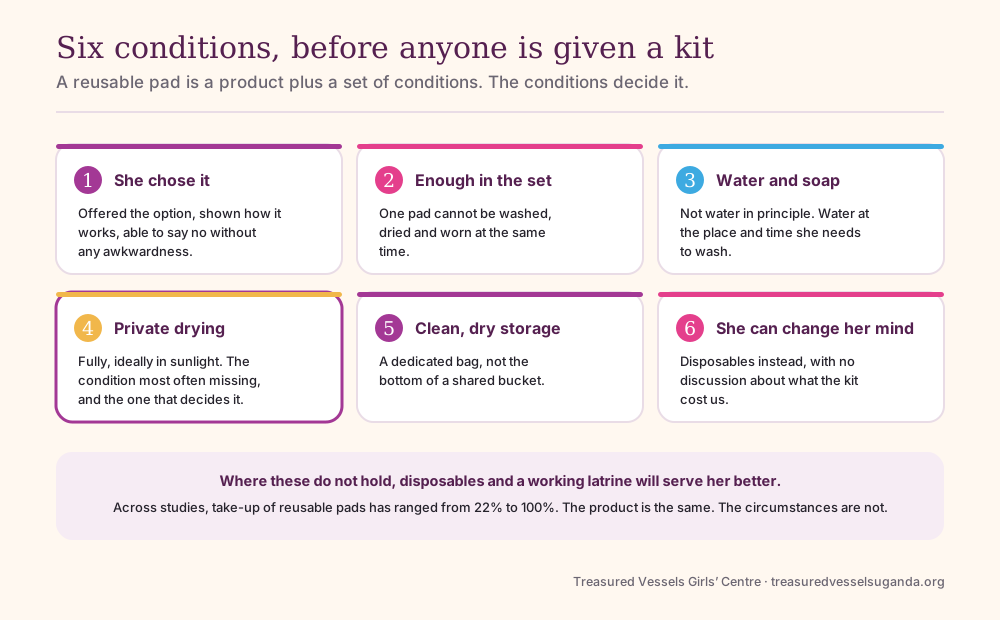
1. She chose it. She was offered the option, shown how it works, and could have said no without awkwardness. A product handed out because it is what the programme bought is not a choice.
2. Enough pads in the set. Insufficient supply is one of the most commonly reported barriers. A single pad cannot be washed, dried and worn at the same time. A workable set is several pads, so one can be drying while another is in use.
3. Water and soap she can actually reach. Not water in principle. Water at the place and time she needs to rinse and wash.
4. Somewhere private to dry. Fully, and ideally in direct sunlight. This is the condition most often missing and the one that quietly decides everything, because a pad that cannot be dried out of sight will be dried badly, hidden damp or abandoned.
5. Somewhere clean and dry to store them. A dedicated bag, not the bottom of a shared bucket.
6. She can change her mind. If she tries it and does not like it, she gets disposables without a discussion about how much the kit cost.
We set out how a school can check most of these in the ten-point menstrual-dignity check. Points two, five and six of that check are conditions three, four and five here.
What makes a good pad, from the maker's side
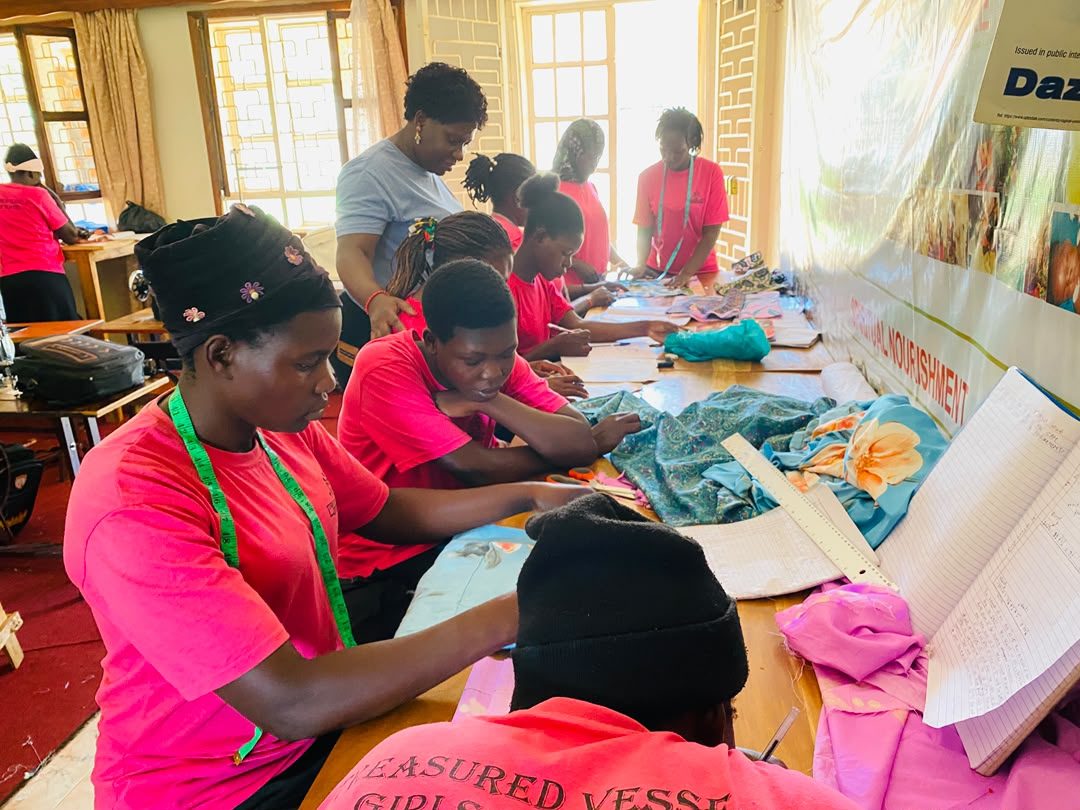
Our tailoring participants make cloth pads as part of their skills training, and the difference between a good one and a bad one is entirely in decisions taken before the sewing starts.
The top layer sits against the skin. It needs to be soft, tightly woven and colourfast, because dye that runs is both alarming and a sign the fabric was not prepared properly.
The absorbent core does the work. It is layered rather than single, and the number of layers is the difference between a pad for a light day and one for a heavy night. A set that offers only one absorbency is a set that will fail somebody.
The backing has to resist strike-through without turning the pad into a plastic sheet. This is the single most common failure in home-made pads: get it wrong in one direction and it leaks, wrong in the other and it is unwearable in Jinja heat.
The wings and the fastening decide whether it stays where it was put. A press stud that pops open during a school day has failed completely, whatever the rest of the pad is like.
Dark fabric, always. Not for modesty. Because staining is permanent on pale cloth and a stained pad gets thrown away long before it has worn out.
Pre-washing before cutting. Cotton shrinks. A pad cut from unwashed fabric changes shape the first time it is laundered, and the wings stop meeting.
Four things get checked before anything leaves the room: the stitching is even and fully closed at the edges, the layers have not shifted inside, the press stud is seated square and holds under a firm pull, and the finished pad has been washed once and still holds its shape.
That is a quality standard, and it is the reason a pad from a supervised workshop is a different object from one made at a weekend sewing event with no checking.
Care: six steps
Getting this right is not fussiness. The evidence is specific about it: reusable pads cleaned with water only carried the highest microbial loads, while those cleaned with a combination of detergent, disinfectant and ironing showed minimal to no microbial contamination.
So the washing method is not a matter of preference. It is the safety margin.
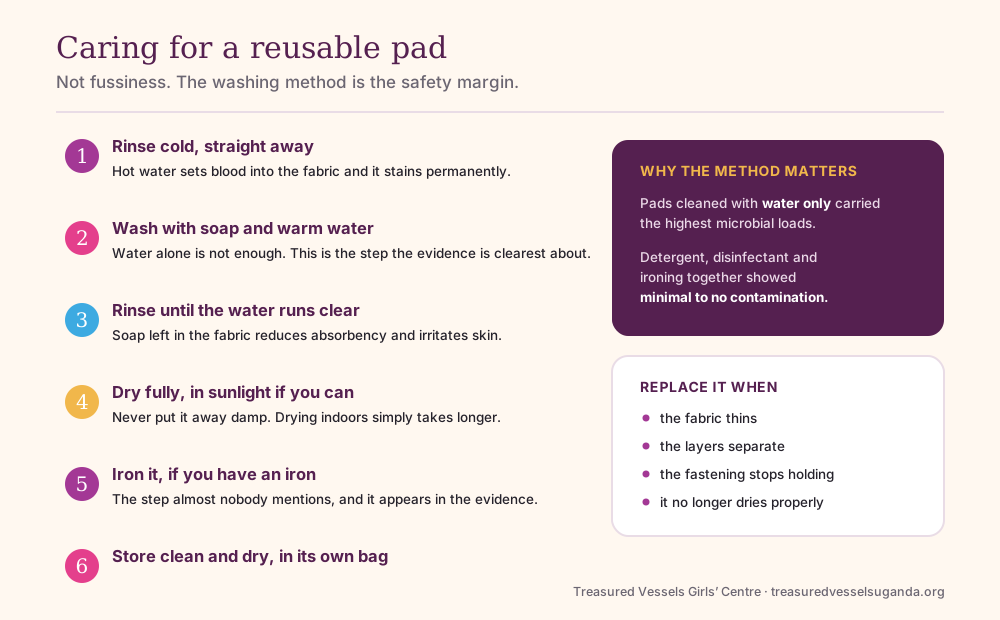
1. Rinse in cold water as soon as you can. Cold, not hot. Hot water sets blood into the fabric and the pad will stain permanently.
2. Wash with soap and warm water. Water alone is not enough. This is the step the evidence is clearest about.
3. Rinse until the water runs clear. Soap left in the fabric reduces absorbency and irritates skin.
4. Dry fully, in direct sunlight if possible. Sunlight helps, and a pad put away damp is the single worst thing that can happen to it. If it has to dry indoors, give it longer.
5. Iron it if you have an iron. This is the step almost nobody mentions and it appears in the evidence alongside detergent as part of what reduces contamination to minimal.
6. Store clean and dry, in its own bag.
Replace a pad when the fabric thins, the layers separate, the fastening stops holding, or it no longer dries properly. A worn-out pad kept in service out of thrift is a false economy.
Download the care card as a printable PDF → Two A4 pages. Page one holds three identical cards to a sheet, so one photocopy supplies three kits; page two is for whoever is doing the distribution, with the six conditions as a tick list and what to say about the evidence. It may be freely copied.
One note on this section. We have written it from the published evidence rather than from clinical training. Before we print it at scale we want it reviewed by a qualified menstrual-health or public-health partner, and if you are one, we would welcome the correction. We would rather be corrected than confidently wrong about something that goes against a girl's skin.
Nobody should be talked into this
Reusable pads suit a lot of girls and they do not suit all of them.
A girl whose household has unreliable water, or who shares a compound with no private drying space, or who boards somewhere she cannot control her own laundry, is not a candidate for a reusable kit however much cheaper it is over a year. Giving her one anyway converts a cost saving on our side into a daily problem on hers.
The right answer for her is disposables, and the right conversation is a short one that does not make her feel she has refused a gift.
We say this because the economics push the other way. Reusables are cheaper for us, they photograph well, they carry an environmental story that donors like, and it is very easy for all of that to quietly become pressure on a fifteen-year-old. The freedom to choose another product has to be real, or the first five conditions do not mean much.
About donated products
We are asked reasonably often whether people can ship us sanitary products. The honest answer has two parts.
Match local demand, or do not send it. Consignments assembled elsewhere arrive in the wrong sizes, the wrong absorbencies and sometimes the wrong product entirely, and the cost of receiving, sorting and storing them can exceed what they are worth. Ask first what is actually needed.
Do not displace local production. This is the part that gets missed. A shipment of free pads into a district where women have been trained to make and sell them removes their customers for as long as the free supply lasts, and those women do not get their market back when it stops. We spend six to twelve months training a woman to make a product, and an unplanned donation can undo that in a fortnight.
The version of generosity that works here is funding the local maker to produce, not competing with her.
What to support instead
This is the one ask.
Locally supervised production. Fabric, thread, press studs, a trained supervisor and a quality check, so what leaves the room is a proper product and the maker is paid.
Education alongside the product. For girls and boys, before menarche rather than after. A kit with no explanation is a bag of cloth.
Water and sanitation. Every condition on this page eventually comes back to a tap, a private space and a place to dry.
- $15 provides a reusable sanitary kit that lasts about a year
- $50 keeps a girl in school for a full term
- $150 provides a sewing machine, which is what turns a trained maker into a supplier
Support locally made menstrual products →
If you run a sewing group, a school or a health service in the Jinja area and want to talk about production standards or a supply arrangement, please get in touch.
Frequently asked questions
Are reusable pads better than disposable ones?
They leak less than the improvised cloth many girls actually use. A Ugandan trial reported leakage among 44.4% of reusable pad users against 78% of those using cloths, and girls rated the reusable pads as more reliable and easier to change. Against manufactured disposables the picture is more even, and the right answer depends on whether a girl has water, privacy and somewhere to dry.
Are they safe?
The available evidence is encouraging but incomplete. Self-reported skin irritation fell substantially in one Ugandan cohort after three months of use, and reviews note no objective reporting on infection either way. What the evidence is clear about is that safety depends on washing: pads cleaned with water only carried the highest microbial loads, while detergent, disinfectant and ironing reduced contamination to minimal or none.
How should a reusable pad be washed?
Rinse in cold water as soon as possible, wash with soap and warm water, rinse until the water runs clear, dry fully and ideally in direct sunlight, iron it if you have an iron, and store it clean and dry in its own bag. Water alone is not sufficient, and hot water at the first rinse will set the stain permanently.
How long does a reusable pad last?
About a year with proper care, which is where the $15 figure comes from. Replace it when the fabric thins, the layers separate, the fastening stops holding, or it stops drying properly.
Should every girl be given reusable pads?
No. A girl without reliable water, private drying space or control over her own laundry is better served by disposables. She should be offered the choice, shown how the reusable option works, and able to decline or change her mind later without any awkwardness.
Can we send you a shipment of sanitary products?
Please ask us first. Donated consignments frequently arrive in the wrong sizes and absorbencies, and receiving and sorting them can cost more than they are worth. More importantly, free product dropped into a district removes the customers of the local women who make and sell pads, and they do not get that market back. Funding local production is more useful than competing with it.
What makes a well-made cloth pad?
A soft, colourfast top layer, a layered absorbent core offered in more than one absorbency, a backing that resists strike-through without being unwearable in the heat, a fastening that holds under a firm pull, dark fabric so staining does not retire the pad early, and fabric pre-washed before cutting so it does not shrink out of shape. Every pad should be checked for even, closed stitching and layers that have not shifted.