
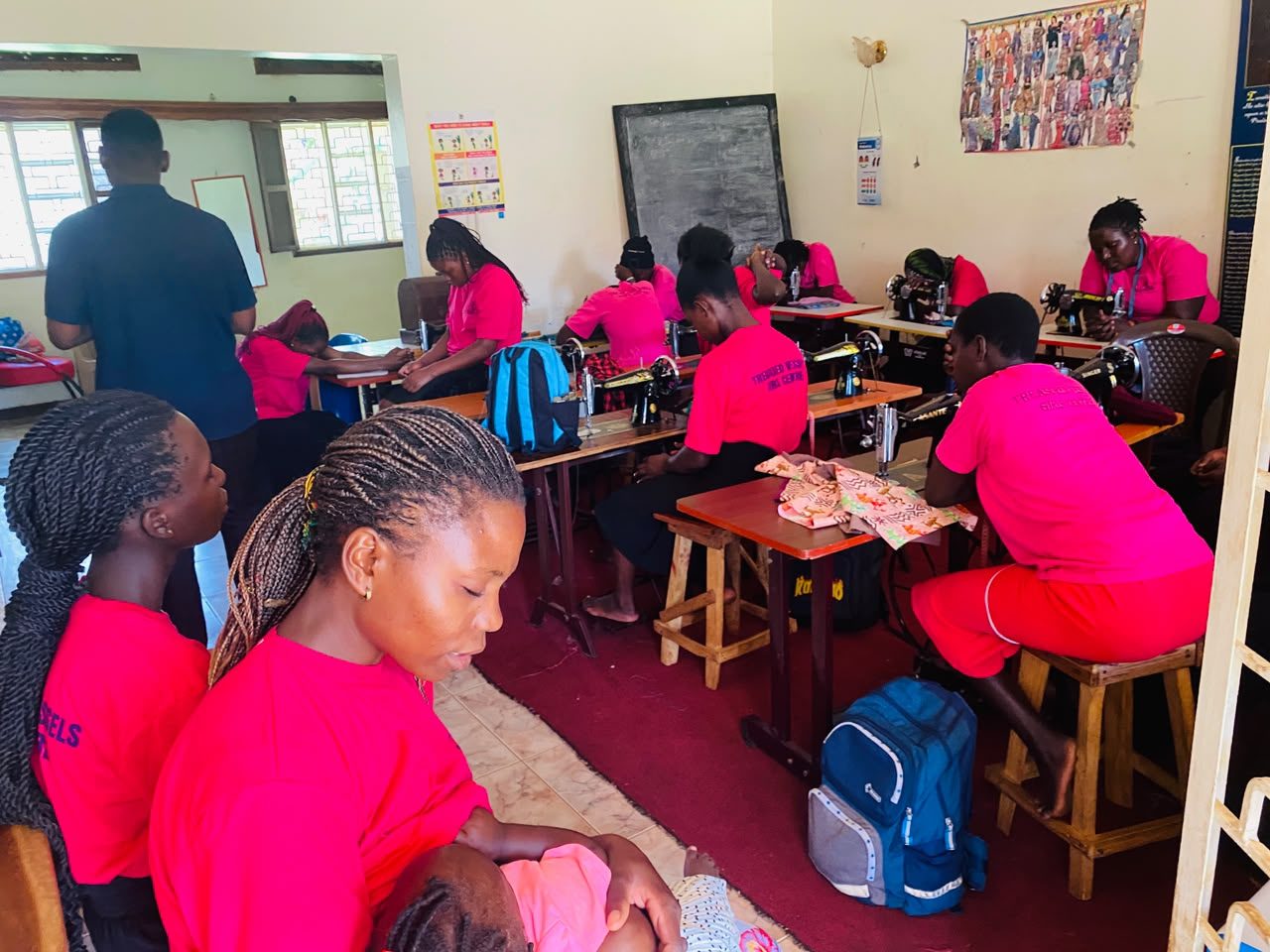
Roughly one in four Ugandan girls aged 15 to 19 has already begun childbearing. That figure comes from the Uganda Demographic and Health Survey 2022, and it has barely moved in a decade.
Behind each of those pregnancies is a girl who now has to live in her community. How that community talks about her, at the borehole, in the classroom and in church, does a great deal to determine what happens next.
Most of what gets said is wrong. Not maliciously wrong, usually. Wrong in the ordinary way that received wisdom is wrong: repeated confidently, never checked, and costly to the person it lands on.
Here are six things we hear often in Jinja, and what the evidence and the law actually say.
Myth 1: "Pregnancy proves she did not care about school"
This is the most common one, and it inverts cause and effect.
Ask the girls themselves and you find the opposite picture. Nearly every young mother who comes through our doors wanted to stay in school. Many were doing well. What ended their education was not indifference. It was an event, and then a set of practical obstacles that nobody helped them get past.
We wrote at length about those obstacles in five barriers that push a girl out of school. The leading one is not pregnancy at all. It is cost.
It is also worth noticing what this myth quietly does. It converts a thing that happened to a girl into evidence about her character. Once that conversion is made, withdrawing support looks reasonable rather than cruel.
What is true: Pregnancy tells you that a girl became pregnant. It tells you nothing about her ambition, her intelligence, or how hard she was working the week before.
Myth 2: "Marriage is the proper solution"
This one is not merely mistaken. It is unlawful.
Article 31(1) of the Constitution of Uganda provides that a man and a woman are entitled to marry only if they are each of the age of eighteen years and above. Article 31(3) requires that marriage be entered into with the free consent of both parties. A marriage arranged for a pregnant fifteen-year-old satisfies neither condition.
There is a second problem. Under section 129 of the Penal Code Act, as amended in 2007, performing a sexual act with a person below the age of eighteen is the felony of defilement, and carries a maximum sentence of life imprisonment. Where a girl under eighteen is pregnant, an offence has been committed. Marrying her to the man responsible does not undo it; it can compound the harm and place her permanently beyond help.
Families who propose this are rarely being cruel. They are usually frightened: of shame, of a mouth they cannot feed, of what the neighbours will say. That fear deserves a practical answer, not a lecture. But the answer cannot be a marriage that the law does not permit and that removes a girl's last route out.
What is true: Child marriage is not a remedy for pregnancy. It is a separate harm, layered on top of the first.
Myth 3: "A young mother cannot return to learning"
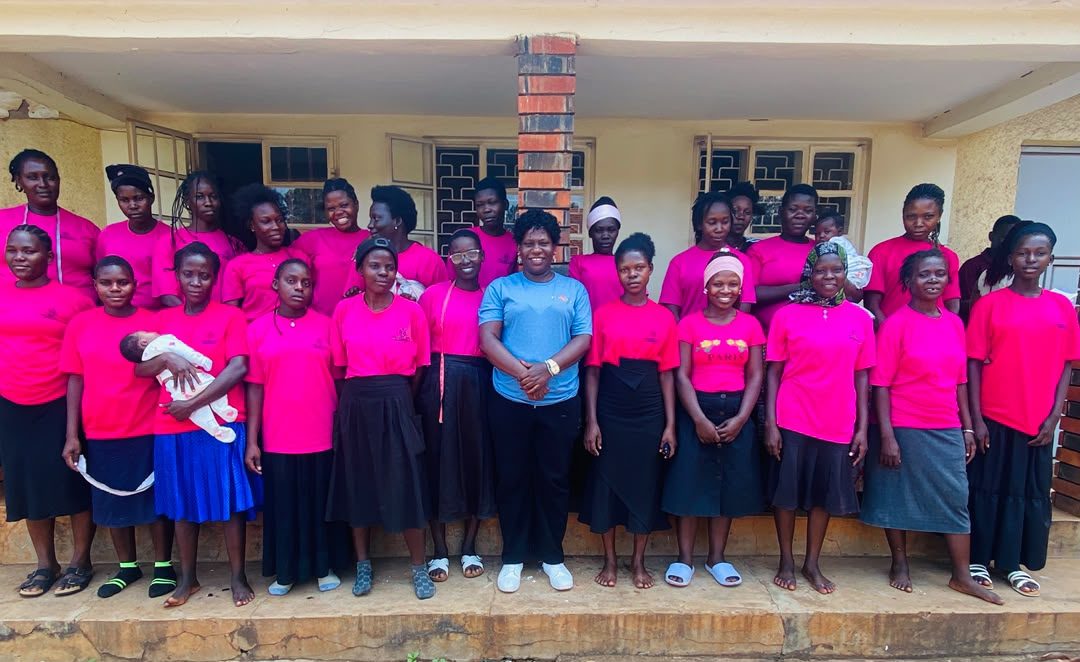
She can. Uganda has approved Revised Guidelines for the Prevention and Management of Teenage Pregnancy in School Settings, which set out how schools should support a girl's return after childbirth.
The difficulty is not permission. It is implementation. UNICEF reports that only about a third of adolescent mothers in Uganda actually return to school after giving birth, not because the door is locked, but because nobody walks them to it.
That gap is the whole subject of returning to learning after teenage pregnancy, where we set out the practical pathway: start with what she wants, check safety and health, choose honestly between formal school, accelerated learning and vocational training, meet the school before she arrives, arrange childcare, and follow up for at least two terms.
What is true: The route back exists and is lawful. What is usually missing is someone to make it happen for one specific girl at one specific school.
Myth 4: "All of these pregnancies were consensual"
This is the myth that does the most damage, because it is the one that lets everyone else off.
A girl under eighteen cannot lawfully consent to a sexual act in Uganda. That is not a technicality. It is the whole basis of the defilement law. When a fourteen-year-old is pregnant, the correct description is not "she made a mistake". A crime has been committed against her.
Beyond the legal position, coercion is common enough that assuming otherwise is reckless. The UDHS 2022 recorded sexual violence against 16% of women. Many pregnancies among adolescent girls involve significantly older men, transactional pressure, or plain force.
We are not saying every adolescent pregnancy involves violence. We are saying that you cannot tell which is which by looking, and that the assumption you make determines whether a girl gets protection or blame.
What is true: Some of these girls are crime victims. Treating them all as though they chose freely guarantees that some of them are punished for what was done to them.
Myth 5: "Helping her rewards bad behaviour"
The concern behind this one is sincere: that visible support for young mothers will encourage other girls to follow.
It does not survive contact with the evidence. The World Bank's work on educating girls as a way of ending child marriage and teenage pregnancy points consistently in the other direction: girls who stay in education marry later, have children later, and have fewer of them. Support that keeps a girl learning reduces early pregnancy. It does not manufacture it.
It also misunderstands the decision it claims to influence. No fifteen-year-old weighs up the availability of a sanitary kit and a school fee before becoming pregnant. That is not how any of this happens.
And there is a child to think about. A young mother left without support raises a child in poverty, and that child is then less likely to complete school, which is how one interrupted education becomes a two-generation problem.
What is true: Support does not cause pregnancy. Withdrawing it does not prevent pregnancy. It simply makes the outcome worse for two people instead of one.
Myth 6: "Vocational training is the only realistic future for her"
This one is more sympathetic than the others, and it is half right, which makes it harder to spot.
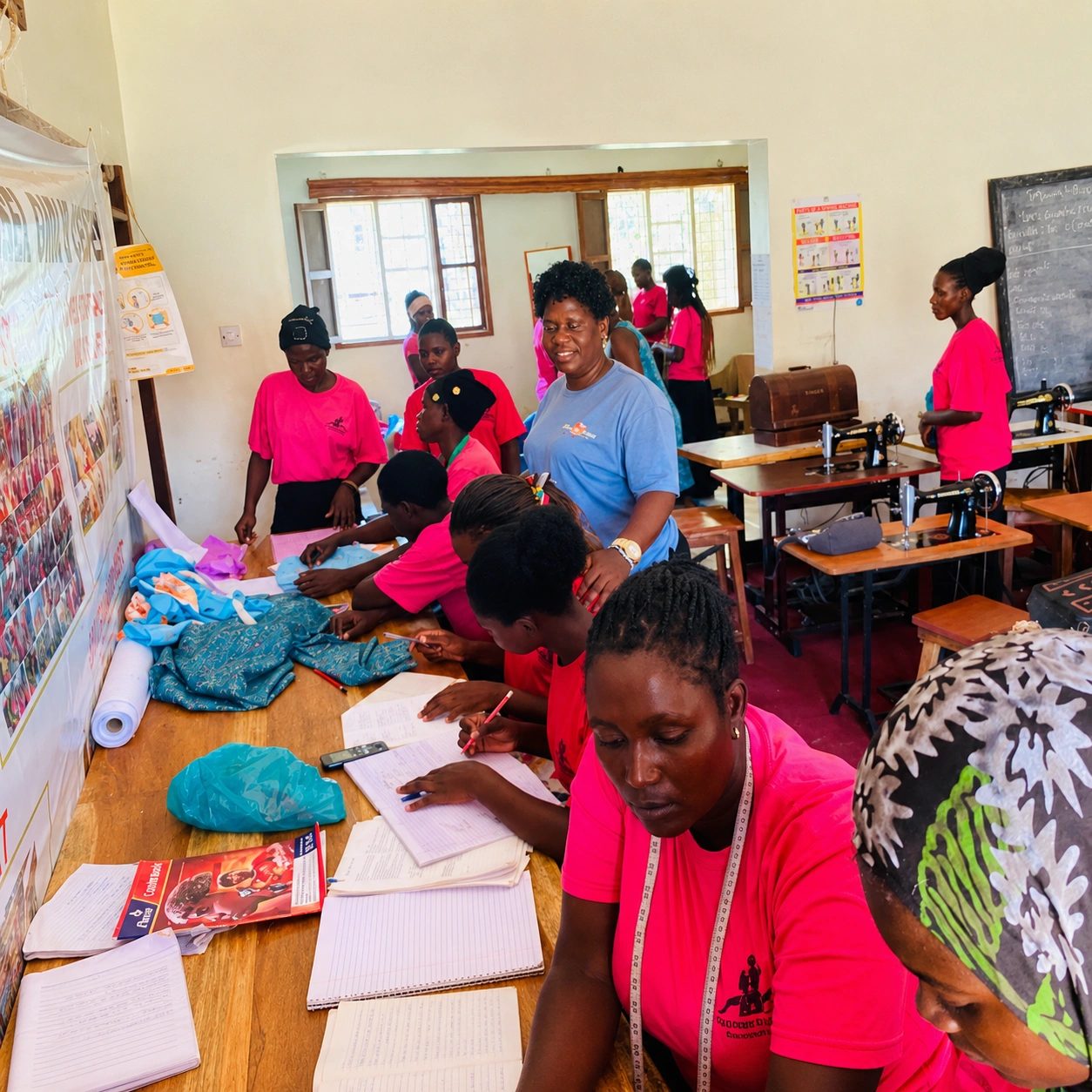
Vocational training is a genuinely good outcome. A young woman earning from tailoring or hairdressing at nineteen, able to feed her child, has not failed at anything. Our skills training programme exists precisely because that route matters.
The error is the word only. Deciding on a girl's behalf that formal education is now beyond her, before asking her and before checking what her school will accept, closes a door that was open. Some young mothers return to the classroom and do well. Some do a trade first and study later. Some never go back, and build a good life anyway.
What matters is that she chooses, with accurate information, rather than having the choice made by whoever is paying.
What is true: Vocational training is a legitimate route, not a consolation prize, and not the only one.
What to say instead
Knowing that something is wrong is not the same as knowing what to put in its place. People repeat these six lines partly because they are the only script available. Here is a better one.
If you are a parent or relative, the useful question is not how did this happen but what does she need now. The first invites an argument about blame that changes nothing. The second gets somewhere. If money is the real obstacle, and it usually is, say so plainly to someone who can help, rather than deciding on her behalf that the situation is hopeless.
If you are a teacher or head teacher, state your re-entry position out loud, before anyone has to ask. Girls and families make decisions months in advance based on what they assume your school will do. Assumption fills the gap when you say nothing, and the assumption is almost always the pessimistic one.
If you are in a church, notice that the congregation is watching how a young mother is received far more closely than it is listening to what is preached about her. A greeting at the door does more than a sermon.
If you are a friend her age, the single most valuable thing is to keep being her friend. Isolation does more damage over a year than any individual insult does in a day.
None of that requires money, training or permission.
Why the words matter
It is tempting to treat all this as a debate about language while the real work happens elsewhere. It is not.
Stigma is the mechanism. A girl who expects to be publicly shamed on her first day back does not go back. A family that believes she has disgraced them does not fund her. A head teacher who thinks her presence sets a bad example finds reasons to exclude her. Every one of those decisions is made by someone repeating one of the six myths above.
Change what people believe and the practical obstacles get smaller, not because anyone donated, but because a hundred small decisions start going the other way.
"Therefore, if anyone is in Christ, he is a new creation; old things have passed away; behold, all things have become new." 2 Corinthians 5:17, NKJV
We are a Christian organisation, and we take that verse to mean something specific: a girl's past does not get to decide her future. If we believe that about ourselves, we are obliged to believe it about her.
If you are a young mother reading this
None of the six things above is true about you.
You are not finished. You are not disgraced. What you need is practical: childcare, fees, someone to talk to your school, a skill you can earn from. Those are all things that can be arranged.
If you are in the Jinja area, contact us. Nothing you say will be shared with your community, and we will not require you to explain or justify anything before we help.
A note on comments and sharing
We moderate discussion on this article. Comments that degrade young mothers, or that identify any girl by name, school or village, will be removed without discussion.
If you know a girl who needs support, please do not name her publicly, not here and not on social media. Contact us privately instead, or encourage her to contact us herself. Her safety is worth more than the visibility of her case.
Stand with young mothers in Jinja
The most useful thing most people can do is not complicated. It is to stop repeating the six myths, and to support the practical things that get a young mother and her child to the far side of this.
- $15 provides a reusable sanitary kit for a year
- $50 keeps a girl in school for a full term
- $150 provides a sewing machine for a young woman building a trade
Sponsor a young mother's next term →
Frequently asked questions
Is it legal in Uganda for a girl under 18 to marry?
No. Article 31(1) of the Constitution of Uganda provides that a man and a woman may marry only if each is aged eighteen or above, and Article 31(3) requires the free consent of both. Marriage is not a lawful response to a pregnancy involving a girl under eighteen.
Can a girl who has had a baby go back to school?
Yes. Uganda has approved Revised Guidelines for the Prevention and Management of Teenage Pregnancy in School Settings, which set out how schools should support a girl's return after childbirth. UNICEF reports that only about a third of adolescent mothers actually return, so the obstacle is usually practical rather than legal.
How common is teenage pregnancy in Uganda?
The Uganda Demographic and Health Survey 2022 found that around 24% of girls aged 15 to 19 have begun childbearing, with the figure slightly higher in rural areas than urban ones.
Does supporting teenage mothers encourage more teenage pregnancy?
The evidence points the other way. World Bank work on girls' education finds that girls who remain in education marry later and have children later. Support that keeps a girl learning reduces early pregnancy rather than causing it.
What should I do if I know a girl who needs help?
Contact us privately, or encourage her to contact us herself. Please do not name her publicly on social media or in comments. That exposes her without improving her situation.
Is vocational training the best option for a young mother?
It is one good option among several, and the right answer depends on her circumstances and her own decision. Some young mothers return to formal school, some join accelerated learning, and some train in a trade and study later. The choice should be hers, made with accurate information.