
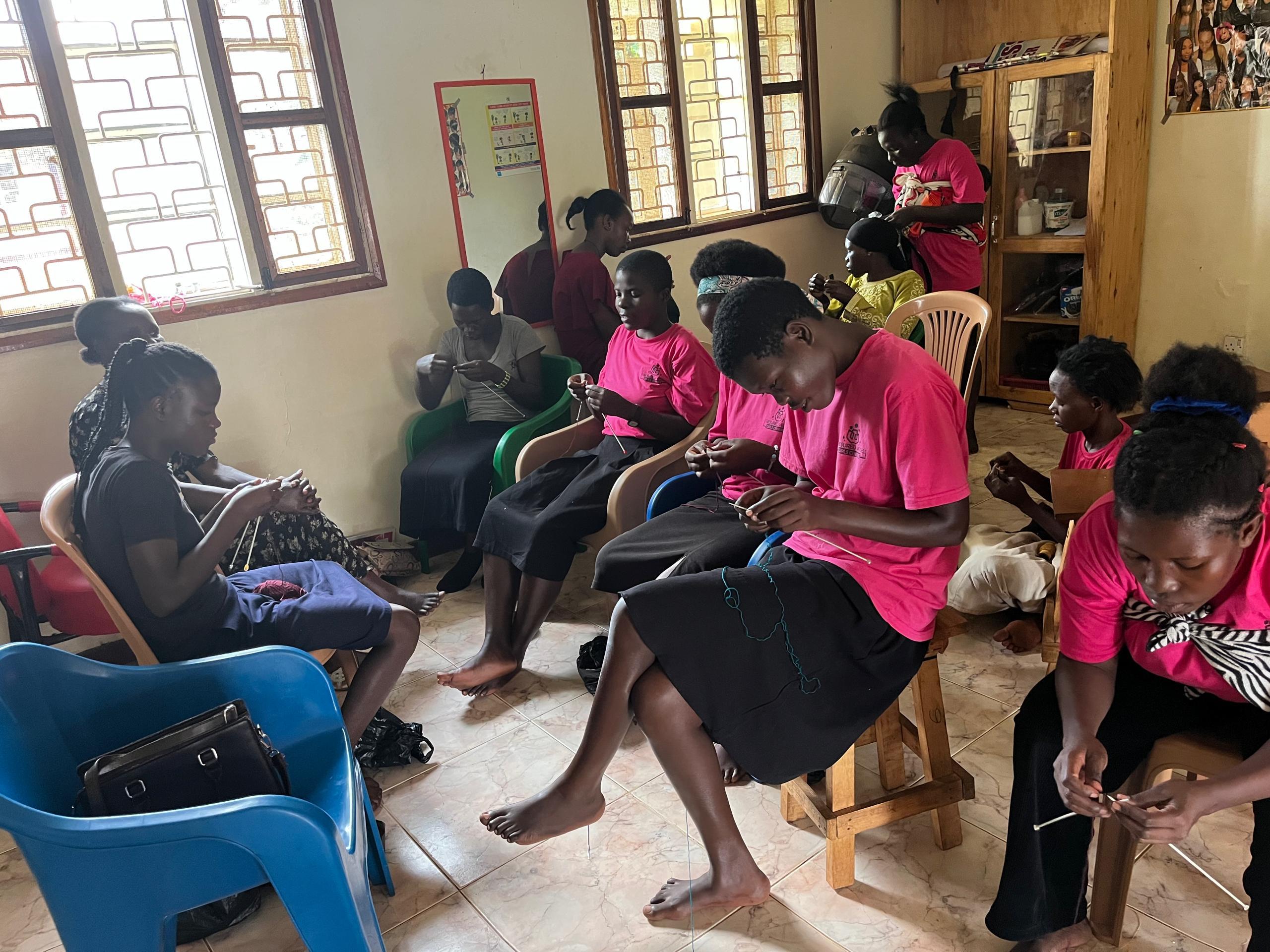
This page is short on purpose. It is meant to be read on a phone, in a hurry, possibly a few minutes before you need it.
Five sentences do most of the work when someone tells you they have been hurt. They take about two minutes, they need no training, and they are almost entirely about restraint: what you do not say matters more than what you do.
If you want the fuller version, with the principles underneath and what Ugandan law offers, that is in our survivor-centred response to gender-based violence. This one is the card you carry.
The five sentences
1. "I believe you."
Out loud, in those words, early.
You are not a court, and believing her is not a finding of fact about anybody. It costs you nothing and it removes the thing she was most afraid of.
2. "This is not your fault."
Also out loud. She has probably already been told otherwise, and may believe it herself.
3. "Are you safe right now?"
The only urgent question. Tonight, that house, the person who hurt her, the children.
If she is in immediate danger, stop here and act on that. Everything else on this page can wait.
4. "Here is who I would have to tell."
Before she says more, not after.
For an adult that is usually: nobody, unless you ask me to, or unless a child is at risk. Saying it first sometimes ends the conversation. Say it anyway, because a disclosure she was tricked into is not consent.
5. "What would you like to happen next?"
Then listen, and start from her answer rather than your plan. If she wants them, you can explain what options exist. If the answer is "nothing yet", say the offer stands and mean it.
The harder half: what not to say
Most of the damage is done by sentences people offer kindly. Each of these is common, each has an obvious motive behind it, and each lands somewhere the speaker did not intend.
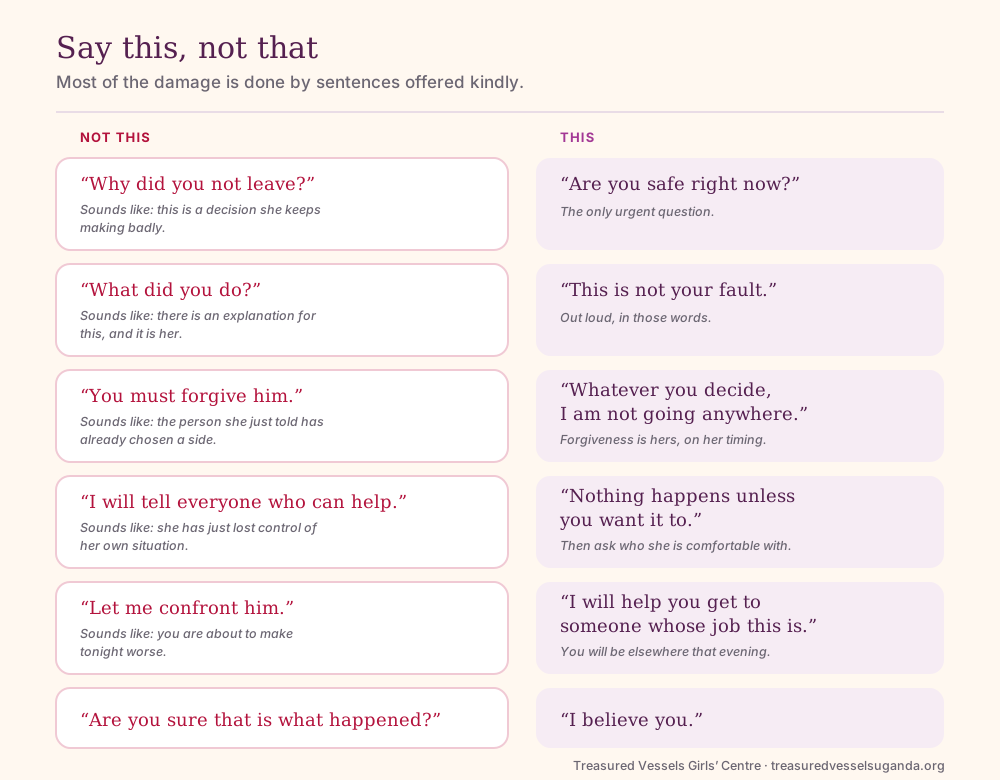
"Why did you not leave?"
What it sounds like to her: you have decided this is a decision she keeps making badly.
Leaving is often the most dangerous moment in an abusive relationship, and she may have no money, nowhere to go, or children she cannot take. She has almost certainly thought about it more carefully than you have.
Say instead: "Are you safe right now?"
"What did you do?"
What it sounds like to her: there is an explanation for this, and it is her.
The question is usually meant as an attempt to understand. It arrives as an accusation, and it is the single fastest way to end a disclosure.
Say instead: "This is not your fault."
"You must forgive him."
What it sounds like to her: the person she just told has already chosen a side.
Forgiveness is hers, on her timing, and it is not the same thing as returning to an unsafe house. In faith settings this is the most common failure and the most damaging, because it comes with authority behind it.
Say instead: "Whatever you decide, I am not going anywhere."
"I will tell everyone who can help."
What it sounds like to her: she has just lost control of her own situation.
Enthusiasm here is genuine and the effect is not. Every person told is another route back to the man involved, and she is the one who lives with the consequences.
Say instead: "Nothing happens unless you want it to. Who would you be comfortable with me speaking to?"
"Let me confront him."
What it sounds like to her: you are about to make tonight worse.
It warns him, tells him she has been talking, and can destroy a prosecution. You will be somewhere else that evening. She will not.
Say instead: "I will help you get to someone whose job this is."
"Are you sure that is what happened?"
What it sounds like to her: exactly what it says.
Say instead: "I believe you."
Confidentiality, in two lines
For an adult, what she tells you is hers. You do not discuss it with her family, her employer, her church or your colleagues. She decides who else is told.
Where a child is at risk, that changes, whether or not the person telling you is the child. Say so before she tells you more:
"If this involves a child being hurt, I will have to involve someone who can protect them. I will tell you who, and I will tell you before I do it."
That sentence occasionally stops a conversation. It is still the right thing to say, because the alternative is a woman discovering later that you passed something on.
Consent before any referral
This is the step most often skipped by people trying to be efficient.
Ask before you contact anyone. Not "I am going to call the probation officer", but "would you like me to call the probation officer, or would you rather do it yourself?"
Tell her exactly what you would say. Vagueness here is not kindness. She is entitled to know what information leaves the room.
A no is a complete answer, and it does not expire. She may say no today and yes in three months, and the way you take the no decides whether there is a yes later.
Ask how she can safely be contacted. A phone may be shared or monitored. Let her choose the number, the time, and whether a message is safe at all.
If the person telling you is a child
The five sentences still apply. Three things change.
You cannot keep it to yourself. Where a child is being harmed, someone with a duty to protect them has to be told. Say so early, in plain words: "I have to tell someone who can keep you safe. I will tell you who, and when."
Ask less, not more. A child who is going to be interviewed properly later should not first be questioned by you. Repeated questioning damages a child's account and damages the child. Let them say what they want to say, do not ask for detail, do not ask them to repeat it, and do not ask leading questions about who or how.
Write down their words, not your summary. As soon as you can afterwards, record what they actually said, in their phrasing, with the date and time. That short note is worth more later than a tidy paragraph in your own words.
Then contact the Uganda Child Helpline on 116, the Child and Family Protection Unit at the nearest police station, or the district probation and social welfare officer. A sexual act with anyone under eighteen is defilement under Ugandan law, as we set out in what Ugandan law says about child marriage.
Afterwards
The conversation ends and you are left holding something. Three things help.
Write down the minimum, once. That she told you, the date, what she agreed to, and anything outstanding. Not the details of what happened to her. A file cannot leak what it never held, and detail belongs with the statutory services.
Do not chase her. Checking in repeatedly turns your concern into pressure, and if her phone is monitored it also creates a record. Behave normally, be where you usually are, and let her come back.
Look after yourself, quietly. Hearing this is heavy, and the instinct to talk it through with a colleague is exactly the instinct that breaks confidentiality. Talk about how you feel with someone unconnected, without the identifying details, or ask us for a conversation with the safeguarding focal person.
And then the unglamorous part: nothing may happen for months. That is not a failure. Most people disclose several times before anything changes, and being the person who took it well the first time is what makes the second time possible.
What this is not
Being useful here depends on knowing the edges of it.
It is not counselling. You are not treating anything. Trauma support is delivered by trained counsellors, and offering an amateur version can do harm.
It is not an investigation. You are not collecting evidence, testing her account or working out what really happened. That belongs to the police and, where a child is involved, to statutory child protection.
It is not legal representation. You cannot advise her on a protection order or a prosecution. A legal aid provider can.
What it is: one person taking her seriously, in the first few minutes, and not making it worse. That is a smaller job than it feels like, and almost nobody does it well.
Our own rule about this
We should state a commitment rather than a suggestion.
Nobody at Treasured Vessels collects or writes up a beneficiary's story until they have completed disclosure-response orientation. Not staff, not volunteers, not a visiting supporter with a camera and good intentions.
The reason is straightforward. The moment somebody sits down with a woman to hear what happened to her, with a notebook, is a disclosure whether or not anyone calls it that. If the person holding the notebook does not know what to say, what not to say, what they may promise and what they must pass on, then the interview itself becomes the harm.
This is also why we do not publish survivor stories at all, which we explain in the pillar article.
Take the card
Download the first-response pocket card as a printable PDF → Two A4 pages. Page one is eight identical wallet-sized cards to a sheet, so one photocopy equips a whole team. Page two is the say-this-not-that sheet and the confidentiality lines, sized for a staff room or vestry wall. It photocopies in black and white and may be freely copied.
For the fuller two-page guide covering the legal routes and what to record, there is also the safe-disclosure guide.
If someone is in immediate danger, that comes before all of this. The Uganda Child Helpline is 116, free from any network, 24 hours, run by the Ministry of Gender, Labour and Social Development. The Child and Family Protection Unit at your nearest police station also handles domestic violence, and your district probation and social welfare officer can advise.
If you want to fund the part that costs money, it is the confidential referral: the fare, the consultation, the staff member's day spent going with her, and the follow-up that finds out whether she arrived.
If your church, school or organisation would like disclosure-response orientation for its people, get in touch. There is no charge.
Frequently asked questions
What should I say first when someone tells me they have been abused?
"I believe you." Out loud, in those words, early. Then "this is not your fault", then "are you safe right now?", then be honest about who you would have to tell, then ask what she would like to happen next. Five sentences, about two minutes.
What should I never say?
"Why did you not leave?", "What did you do?", "You must forgive him", "I will tell everyone who can help", "Let me confront him", and "Are you sure that is what happened?" Each is usually meant kindly and each lands as blame, pressure or a loss of control over her own situation.
Can I promise to keep it secret?
Not without qualification. For an adult, what she tells you is hers and you do not pass it on without her agreement. Where a child is at risk there are duties that override a promise, and you should say so before she tells you more rather than after.
Do I need her permission before calling someone for help?
Yes, unless a child is at risk or someone is in immediate danger. Ask whether she would like you to contact a service, tell her exactly what you would say, and accept a no. Also ask how she can safely be contacted, since a phone may be shared or monitored.
Is listening to someone the same as counselling them?
No. Supportive listening is not counselling, not an investigation and not legal advice. You are not treating anything, testing her account or advising on a case. Counselling comes from trained counsellors, investigation from the police and statutory child protection, and legal advice from a legal aid provider.
What if I say the wrong thing?
Correct it plainly and carry on. "I should not have asked that, I am sorry" repairs most of it. The responses that cause lasting harm are the ones that take control away from her, which is why confronting, exposing and telling other people matter more than an awkward sentence.
Who at Treasured Vessels is allowed to record someone's story?
Only people who have completed disclosure-response orientation, and in practice we do not publish survivor stories at all. Sitting down with a woman and a notebook to hear what happened to her is a disclosure whether or not anyone calls it that, and it needs the same care.